
The Concept of Pathology Depth
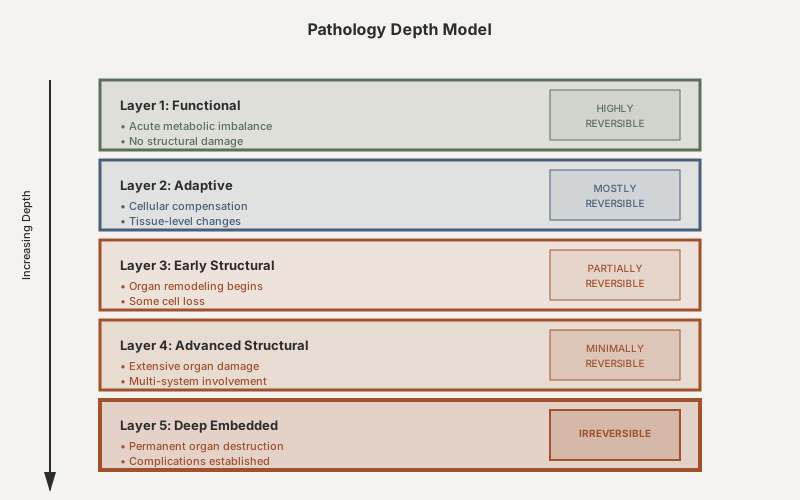
Ayurvedic medicine categorizes disease according to depth—how far dysfunction has penetrated into body tissues and systems. Superficial pathology affects outer layers: digestion, circulation, acute metabolic disturbances. These conditions respond readily to intervention because dysfunction has not yet embedded into tissue structure. Deeper pathology involves structural tissue changes, cellular programming alterations, and systemic adaptations that resist surface-level correction.
This depth dimension provides critical prognostic information. Two patients with identical glucose readings may have vastly different pathology depth. One has recent-onset dysfunction still operating primarily at functional level—easily reversed with appropriate intervention. The other has years of embedded cellular and tissue changes—requiring far more intensive and prolonged correction despite similar laboratory values.
The depth framework explains why duration of disease matters so profoundly for treatment outcomes. Each year of uncontrolled diabetes allows pathology to penetrate deeper into tissues. Early intervention catches dysfunction at superficial levels where reversal is straightforward. Delayed intervention addresses pathology that has moved into deep tissue structures where correction becomes exponentially more difficult.
Modern medicine recognizes similar concepts through metabolic memory and cellular reprogramming. These contemporary frameworks validate the ancient Ayurvedic observation that disease depth determines treatment requirements and recovery potential. Superficial dysfunction responds to surface intervention. Deep-seated pathology demands work at the depths where it resides.
"In Ayurveda, this is the distinction between Sadhya and Asadhya — curable and incurable disease — determined not by diagnosis alone but by the depth at which pathology has become embedded. Depth assessment is the most consequential clinical judgment an Ayurvedic physician makes."
Ayurvedic Clinical Lens · Diabetes Reversal Clinic
How Pathology Becomes Embedded
Disease progression in Ayurvedic understanding follows a clear sequence. Initially, imbalance occurs in digestive and circulatory functions—the most superficial and dynamic systems. If not corrected, that imbalance begins affecting tissues: first plasma and blood, then muscle, fat, bone, and finally reproductive tissues. Each level represents deeper structural involvement.
As dysfunction moves through tissue levels, it transitions from reversible to structural. Early plasma and blood disturbances resolve quickly—these tissues turn over rapidly and can regenerate normal function within weeks of correction. Muscle and fat tissue involvement requires months to reverse as these more stable tissues slowly remodel. Bone and deep tissue involvement may prove largely irreversible due to the minimal regenerative capacity of these structures.
In diabetes specifically, pathology progression follows this pattern. Initial dysfunction affects circulating nutrients and metabolic signaling—superficial levels. Persistent imbalance embeds into muscle, liver, and fat tissue—intermediate depth. Advanced disease creates structural changes in pancreatic islets, kidney glomeruli, nerve tissue, and bone—deep-seated pathology with limited reversibility.
The embedding process occurs through multiple mechanisms. Chronic inflammation creates permanent tissue scarring. Oxidative damage induces irreversible genetic and epigenetic changes. Cellular adaptation pathways lock into dysfunctional states. Structural proteins undergo glycation that persists for their entire lifespan. What begins as temporary functional disturbance solidifies into permanent structural alteration.
Channels and Blocked Pathways
Ayurveda describes channels—functional pathways through which nutrients, wastes, and regulatory signals move. In health, these channels remain clear and substances flow appropriately. Disease creates channel blockages where normal flow becomes obstructed. Deep-seated pathology represents severe, chronic channel obstruction that standard interventions cannot clear.
Modern physiology validates this channel concept through understanding of vascular flow, lymphatic drainage, neural conduction, and cellular transport systems. Diabetes obstructs all these channels. Microvascular disease blocks nutrient delivery to tissues. Lymphatic dysfunction impairs waste removal. Neuropathy disrupts neural signaling. Insulin resistance creates cellular transport blockages preventing glucose entry.
These blockages become self-perpetuating. Impaired nutrient delivery reduces cellular capacity to clear metabolic waste. Accumulated waste worsens inflammation and oxidative stress. Increased inflammation further damages transport systems. The blockages deepen progressively, creating pathology that resists surface correction because the correction itself cannot reach affected tissues through blocked channels.
Ayurvedic intervention for deep-seated pathology prioritizes channel clearance. This means restoring vascular flow through improving endothelial function, enhancing lymphatic drainage through mobilization and specific supportive measures, reestablishing neural pathways through reducing neuropathic damage, and clearing cellular transport blockages through restoring membrane function and transporter expression. Only after channels reopen can corrective substances reach deep tissues.
The Concept of Tissue Memory
Ayurveda recognizes that tissues retain memory of dysfunction. Even after triggering causes are removed, tissues continue operating in disordered patterns learned during years of disease. This tissue memory prevents immediate correction and explains why improvement occurs gradually even with optimal intervention.
Contemporary biology confirms tissue memory through discoveries about epigenetic modifications, cellular senescence, and trained immunity. Cells exposed to chronic metabolic stress develop epigenetic marks that maintain altered gene expression long after metabolic conditions normalize. Senescent cells accumulate in tissues and secrete inflammatory factors perpetuating dysfunction. Immune cells develop inflammatory memory that persists even when original inflammatory triggers are removed.
This biological memory manifests clinically in patients who achieve excellent glucose control yet continue experiencing progressive complications. Their current metabolic state is healthy, but tissue memory of years of hyperglycemia drives ongoing pathology. The tissues remember what they experienced and continue responding as if those conditions persist.
Erasing tissue memory requires extended intervention allowing cellular populations to turn over, epigenetic marks to remodel, senescent cells to be cleared, and immune memory to fade. The timeline depends on tissue turnover rate—rapid in blood and gut lining, moderate in liver and muscle, very slow in bone and neural tissue. Deep tissues with slow turnover retain memory longest and prove most resistant to correction.
Sequential Unwinding of Layered Pathology
Disease develops in layers as dysfunction progressively deepens. Correction must unwind those layers in reverse order—addressing superficial layers first before accessing deeper pathology. Attempting to correct deep pathology while superficial layers remain disturbed proves ineffective because surface dysfunction continuously re-creates deep pathology.
Practical application in diabetes means first addressing circulating metabolic imbalances—normalizing glucose levels, reducing inflammatory mediators, clearing oxidative stress markers. This establishes basic metabolic stability without which deeper work cannot succeed. Next comes intermediate tissue correction—restoring hepatic function, improving muscle insulin sensitivity, normalizing adipose tissue metabolism. Only after these layers stabilize can the deepest work proceed—pancreatic beta-cell recovery, microvascular regeneration, neural pathway restoration.
Attempting deep correction prematurely wastes effort. Beta cells cannot recover while circulating inflammatory cytokines continue damaging them. Microvascular function cannot restore while oxidative stress remains elevated. Neural tissue cannot regenerate while metabolic chaos persists. The deeper layers require stable foundation in outer layers before they can heal.
This sequential approach demands patience. Patients want immediate address of their most troubling symptoms—often manifestations of deep pathology. But effective correction requires working through layers methodically. Surface stabilization may take months before deeper work begins. Deep tissue correction may require years of sustained intervention. Attempts to accelerate by skipping layers typically fail, requiring return to proper sequence.
Why Forcing Deep Change Creates Resistance
Deep-seated pathology has established homeostasis—a stable, albeit dysfunctional, equilibrium. Tissues have adapted to disordered states. Cellular systems have recalibrated to abnormal conditions. Metabolic pathways have found new set points. This pathological homeostasis resists change because the body perceives its current state, however unhealthy, as stable and predictable.
Aggressive attempts to force rapid correction trigger protective resistance mechanisms. The body interprets sudden metabolic changes as threats to stability and activates counterregulatory responses. Rapid glucose reduction triggers stress hormone release. Aggressive fat mobilization generates inflammatory responses. Forced metabolic shifts overwhelm cellular adaptation capacity.
This resistance manifests as treatment failure, side effect emergence, or paradoxical worsening. Patients experience severe hypoglycemia when glucose drops too quickly. Rapid weight loss triggers metabolic adaptation that slows further loss. Intensive exercise in deconditioned patients causes injury or excessive fatigue. The forced change exceeds what chronically adapted systems can accommodate.
Gentle, progressive intervention allows pathological homeostasis to gradually shift toward healthier equilibrium without triggering defensive resistance. Small consistent changes accumulate over time, allowing tissues to adapt incrementally. The body perceives gradual shifts as manageable rather than threatening. Protective mechanisms remain quiescent while healing progresses steadily through layers of pathology.
Individual Variation in Pathology Depth
Patients with similar disease duration show remarkable variation in pathology depth. One person with ten years of diabetes may have relatively superficial dysfunction amenable to fairly rapid correction. Another with identical disease duration may have profound deep-seated pathology requiring years of intensive intervention.
This variation reflects differences in constitutional vulnerability, genetic factors affecting cellular resilience, environmental stresses accelerating disease progression, and quality of metabolic control during disease course. Someone maintaining reasonable glucose control even with suboptimal treatment develops pathology more slowly than someone with years of severe hyperglycemia. Constitutional factors determine which tissues prove most vulnerable—some patients show early pancreatic involvement, others primarily hepatic or renal.
Ayurvedic assessment determines individual pathology depth through detailed clinical examination, pulse assessment revealing tissue-level dysfunction, and evaluation of response patterns to previous interventions. This depth assessment guides realistic goal-setting and intervention intensity. Superficial pathology justifies aggressive goals and relatively brief treatment timelines. Deep-seated pathology demands modest initial goals and extended correction periods.
The critical insight is that pathology depth, not just disease duration or glucose readings, determines treatment requirements and potential outcomes. Standardized protocols applying identical intervention regardless of depth prove inadequate. Effective treatment matches intervention depth and duration to actual pathology depth in individual patients.
Markers of Deep-Seated Pathology
Certain clinical patterns signal deep-seated rather than superficial pathology. Minimal response to previously effective interventions suggests dysfunction has embedded beyond the reach of those interventions. Progressive complications despite reasonable glucose control indicate deep tissue damage proceeding independently of current metabolic state. High medication requirements with poor control signal exhausted compensatory capacity.
Physical examination findings reveal pathology depth. Significant neuropathy indicates neural tissue involvement—deep pathology in slow-regenerating tissue. Advanced retinopathy documents microvascular structural damage. Reduced kidney function signals irreversible nephron loss. These findings mark transition from reversible to largely permanent pathology requiring different intervention approach.
Laboratory markers also inform depth assessment. Persistently elevated inflammatory markers despite metabolic improvement suggest deep inflammatory embedding. Poor C-peptide response to stimulation indicates advanced beta-cell loss. Significant proteinuria marks structural kidney damage. These measurements help distinguish superficial from deep pathology when clinical presentation is ambiguous.
Realistic Expectations for Deep Pathology Correction
Deep-seated pathology may improve substantially but rarely reverses completely. Tissues with permanent structural damage cannot fully regenerate. Epigenetic modifications can shift but may not completely normalize. Lost cell populations cannot be replaced. Correction means achieving maximum possible recovery within biological constraints—not restoration to pre-disease state.
Even partial correction of deep pathology provides meaningful benefit. Slowing progression prevents further deterioration. Stabilizing dysfunction at current level avoids complications that would develop with continued decline. Modest functional improvement—reduced medication requirements, better glucose stability, improved energy—significantly enhances quality of life even when complete reversal is impossible.
The timeline for addressing deep-seated pathology extends to years. Superficial dysfunction may correct in months. Intermediate depth might require six months to a year. Deep pathology demands sustained intervention over multiple years as tissues slowly remodel, cellular populations turn over, and embedded dysfunction gradually releases. Expecting rapid results from deep pathology correction sets up inevitable disappointment and premature treatment abandonment.
Success with deep pathology requires accepting extended timelines, celebrating incremental progress, and understanding that stability represents victory when complete reversal is biologically impossible. The work continues not because it fails but because deep correction operates on timescales longer than modern medical culture typically acknowledges or tolerates. Ayurvedic perspective: Sequential unwinding of deep-seated pathology — working from superficial layers inward, clearing channels before restoring tissues — is Ayurveda's structural answer to the question of why aggressive surface intervention consistently fails in long-standing disease.