
Ayurvedic Medicine · Bengaluru

A Structured Ayurvedic Approach for Long-Standing Type 2 Diabetes

We apply Ayurvedic metabolic science to correct the internal dysfunction that keeps chronic diabetes locked in place — addressing the disease at the depth where it has settled, not just the numbers it produces.

Built for patients whose condition has progressed beyond routine lifestyle advice or medication adjustment — typically 8 to 25+ years of diabetes.

Led by Dr. Soumya R. Hullannavar · Chief Consultant · Diabetes Reversal Clinic

Clinical Ayurvedic care environment

Clinical Leadership

S

Dr. Soumya R. Hullannavar

Chief Consultant · Diabetes Reversal Clinic · Bengaluru

Dr. Soumya R. Hullannavar brings classical Ayurvedic training to the specific challenge of long-standing metabolic disease. Her clinical approach begins with detailed constitutional assessment — identifying the individual pattern of metabolic failure, the depth at which dysfunction has embedded, and the sequence in which organ systems have been compromised. This diagnostic clarity is what makes personalised correction possible. The Diabetes Reversal Clinic was built on a single conviction: that Ayurveda, applied rigorously and at the correct depth, can address what surface-level intervention cannot reach.

The Ayurvedic Approach

Why Ayurveda for Long-Standing Diabetes

Modern medicine controls the expression of diabetes well — suppressing glucose, managing blood pressure, preventing acute crises. What it cannot do is correct the internal environment that sustains the disease. This is precisely the domain Ayurveda was developed for.

Ayurveda understands long-standing Type 2 diabetes as a disease of accumulated systemic imbalance — one that has progressively moved from surface-level metabolic disruption into deep tissue structures. The clinical framework it offers is not philosophical. It is a precise diagnostic system that identifies how dysfunction travels from the digestive tract into the bloodstream, from the blood into organ tissue, and from organ tissue into what modern medicine now calls cellular memory and structural insulin resistance.

Where conventional treatment targets parameters — glucose, HbA1c, lipids — Ayurvedic diagnosis targets the internal conditions that generate those parameters. The question is not "what are the numbers?" but "what pattern of internal dysfunction is producing them, and at what depth has that pattern become entrenched?"

This depth-oriented thinking is Ayurveda's central contribution to chronic metabolic disease. A patient with 15 years of diabetes and a patient newly diagnosed may have identical HbA1c readings — but entirely different internal profiles, entirely different layers of dysfunction to address, and entirely different treatment requirements. Ayurvedic assessment accounts for this. Uniform pharmaceutical protocols do not.

"In Ayurveda, long-standing diabetes is understood as accumulated metabolic toxin load embedding itself progressively deeper into organ tissue — sustaining the disease from within, long after glucose levels appear controlled."

Ayurvedic Clinical Lens
Standard Approach
✦ Ayurvedic Approach
Suppress glucose pharmacologically
Restore the internal conditions for natural glucose regulation
Manage each organ's dysfunction separately
Correct the sequence of failure — tissue layer by tissue layer
Escalate medication as disease progresses
Reduce dependency as internal function rebuilds
Uniform protocols based on HbA1c targets
Constitutional assessment — no two patients corrected identically
Does not address accumulated metabolic residue or blocked pathways
Channel clearance and toxin elimination are primary therapeutic goals

Core Ayurvedic Concepts Behind This Clinic's Work

Agni

Metabolic Fire

The governing force of all metabolic transformation. Weakened in long-standing diabetes — restoration of Agni is the foundation of every other correction in this clinic's approach.

Ama

Metabolic Toxin Load

Accumulated unprocessed metabolic waste that coats tissues, blocks functional channels, and sustains the inflammatory environment keeping insulin resistance entrenched.

Dhatu

Tissue Layers

Seven progressive tissue layers through which dysfunction deepens over time. In long-standing diabetes, pathology moves from plasma and blood into muscle, fat, and eventually nerve — each deeper layer harder to correct.

Srotas

Functional Channels

The body's physiological pathways — vascular, lymphatic, neural, metabolic. Blockage of these channels in diabetes mirrors microvascular disease and impaired insulin signalling. Clearance precedes tissue correction.

Prakriti

Individual Constitution

Each patient's fundamental metabolic-physiological nature. The foundation of personalised treatment — determining which systems are inherently vulnerable and which therapeutic sequence will work.

Prameha

Diabetes in Ayurveda

The classical Ayurvedic category for metabolic disorders, of which Type 2 diabetes is the most advanced form. Understood as a systemic disease of internal coordination — not a disease of glucose alone.

What Changes Over Time

The Reality of Long-Term Diabetes

Years of elevated glucose do more than raise numbers on a meter. At the cellular level, prolonged exposure to high sugar retrains cells to malfunction. Insulin receptors lose sensitivity not because of a temporary imbalance, but because cells have learned — and now expect — dysfunction as their baseline state.

Organs that have managed years of metabolic stress begin to adapt to the damage itself. The pancreas shifts from active secretion to conservation mode. The liver, overwhelmed by constant glucose processing, develops its own form of resistance. Muscle tissue stops responding to insulin signals with the coordination it once had.

For many patients, medication escalation follows — from single drugs to combinations, from oral agents to insulin. This progression often reflects not personal failure, but the body's deepening entrenchment in dysfunction. Medication can suppress glucose expression, but it does not unwind the years of accumulated internal imbalance that drive the disease forward.

The disease you have today is not the disease you started with. It has evolved, deepened, and spread through interconnected systems. Ayurveda maps this as progressive tissue-layer contamination — each year allowing dysfunction to settle one level deeper, making surface-level correction progressively less effective.
The Plateau Problem

Why Many Patients Plateau

Insulin resistance in long-standing diabetes becomes structural, not just biochemical. The problem is no longer limited to receptor function or hormone levels. Cellular machinery itself has adapted to chronic stress, encoding patterns of dysfunction into tissue-level memory.

The pancreas, liver, and skeletal muscle lose their coordinated metabolic response. Each organ develops its own adaptive strategies to survive in a disordered internal environment. What begins as temporary compensation becomes permanent recalibration. The body repeats learned dysfunction automatically, even when external conditions improve.

This phenomenon — metabolic memory — explains why glucose normalisation alone often fails to restore health. Cells remember years of damage. Organs retain adaptive patterns long after blood sugar stabilises. The internal metabolic environment remains disordered at levels that standard monitoring cannot detect.

Ayurveda identifies this as deeply embedded metabolic residue — dysfunction that has moved beyond active symptoms into structural tissue entrenchment. Surface interventions address expression, not foundation. They manage current glucose levels while the underlying disorder continues to evolve silently beneath the numbers.

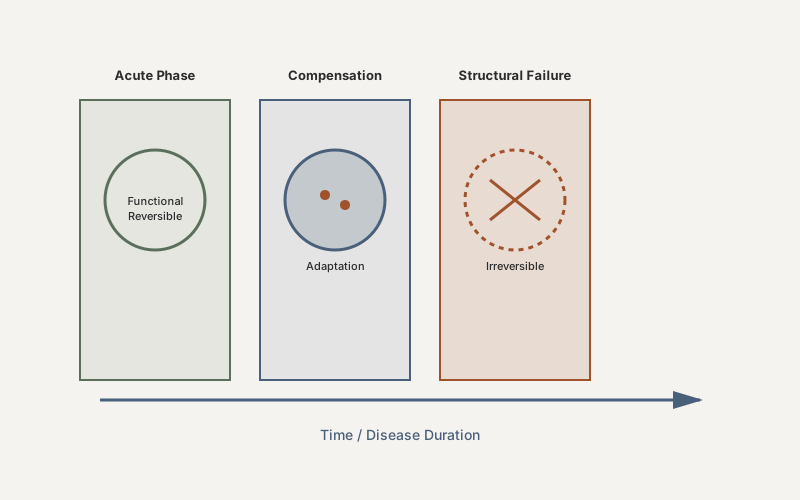
Progression from early metabolic imbalance to structural resistance
Progression from early imbalance to structural resistance — and why surface correction stops working

The Therapeutic Logic

The Ayurvedic Reversal Framework

Ayurvedic correction for long-term diabetes operates at four interconnected levels, addressing the depth at which dysfunction has taken root.

At the cellular level, work focuses on restoring metabolic responsiveness — not by forcing receptors to react, but by creating internal conditions where normal sensitivity can gradually return. This requires addressing the chronic inflammatory load that keeps cells in a state of metabolic stress, and systematically clearing the accumulated metabolic residue that sustains it.

Organ-level correction addresses functional degradation in the pancreas, liver, and muscle tissue. Each organ's capacity must be rebuilt systematically, respecting the timeline required for biological repair. Forcing rapid change in exhausted organs often triggers protective resistance, deepening the very patterns being addressed.

Ayurveda's diagnostic framework identifies the specific order in which each patient's internal systems have failed. Correction follows that same order in reverse — unwinding dysfunction layer by layer rather than attacking all fronts simultaneously. This sequencing is what makes the approach effective where surface-level intervention has produced only a plateau.

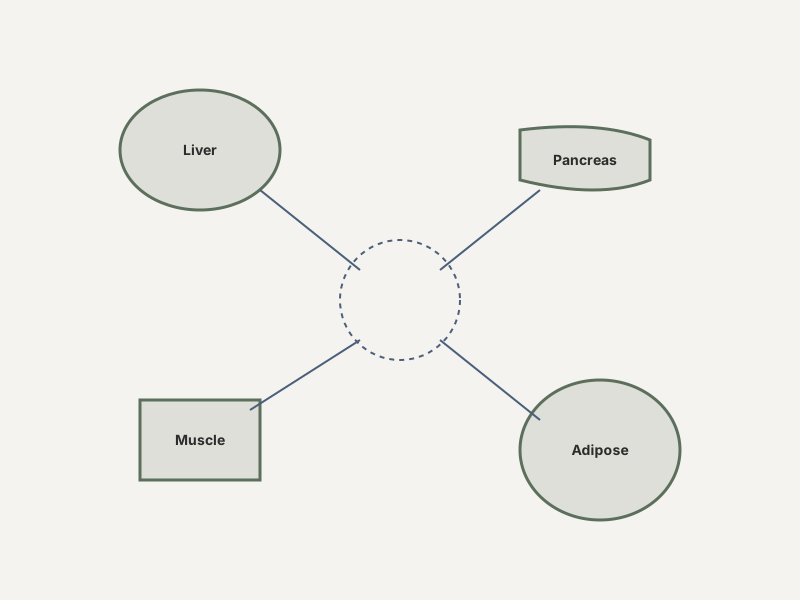
Interconnected organ systems in long-term diabetes
Interconnected organ systems requiring coordinated Ayurvedic correction

Clinical Approach

Personalised Internal Programs

Working with long-standing diabetes cannot be reduced to a single protocol or packaged plan. Each patient enters through a structured clinical process that begins with detailed assessment of disease history, laboratory indicators, metabolic behaviour, and the sequence in which dysfunction has developed across systems.

This assessment establishes the internal pattern of failure. In some patients, insulin resistance is driven primarily by hepatic overload. In others, pancreatic exhaustion or chronic inflammatory burden dominates. Ayurvedic diagnostic logic — grounded in constitutional assessment and tissue-layer analysis — identifies these relationships so that correction begins at the level most responsible for ongoing deterioration.

Correction proceeds through ordered stages rather than aggressive intervention. Initial work aims to reduce active metabolic stress and restore basic coordination between organs. As stability emerges, deeper layers of dysfunction can be addressed without provoking defensive resistance from exhausted tissues.

Support may involve classical Ayurvedic formulations, Panchakarma-based detoxification where indicated, nutritional restructuring aligned with individual constitution, and regulation of daily physiological rhythms. These elements are introduced in sequence as biological readiness allows — not uniformly, and not simultaneously.

Uniform programs fail because long-term diabetes does not progress along a single pathway. The objective is not rapid glucose normalisation, but progressive restoration of metabolic coordination that sustains itself over time.

Clinical Phases

Structure of Clinical Correction

Four ordered phases — each with its clinical focus and Ayurvedic therapeutic logic. Sequence matters. Each phase advances only when internal metabolic response demonstrates readiness.

Phase 1 — Clinical Assessment

  • Review of disease duration and treatment history
  • Laboratory and metabolic marker evaluation
  • Constitutional assessment — individual metabolic profile and failure pattern
  • Identification of dominant dysfunction and affected tissue layers
  • Mapping of organ failure sequence to guide correction order
Ayurveda Nidana — Diagnostic Clarity

Phase 2 — Initial Correction

  • Reduction of active metabolic stress and inflammatory burden
  • Restoration of basic digestive and metabolic function
  • Stabilisation of glycaemic volatility
  • Initial clearance of accumulated metabolic residue
Ayurveda Ama Pachana + Agni Restoration

Phase 3 — Deep Metabolic Support

  • Support for insulin responsiveness and digestive efficiency
  • Rebuilding of hepatic and pancreatic functional capacity
  • Strengthening of internal metabolic signalling
  • Adjustment based on observed biological response
Ayurveda Rasayana — Tissue Regeneration

Phase 4 — Monitoring & Adaptation

  • Regular clinical review of progress
  • Medication guidance under physician supervision
  • Ongoing refinement of intervention sequence
  • Transition toward long-term metabolic stability and rhythm alignment
Ayurveda Svasthavritta — Sustained Stability

This structure does not represent a fixed timeline or uniform protocol. Each phase advances only when internal metabolic response demonstrates readiness. Correction proceeds according to biological capacity, not predetermined schedules.

Patient Suitability

Who This Program Is For — And Who It Is Not For

This Work Is Designed For:

  • Patients with long-duration Type 2 diabetes — typically 8 to 25+ years — who have progressed beyond early-stage management
  • Those currently on multiple medications, insulin, or combination therapy
  • Patients facing complications, metabolic instability, or persistent deterioration despite adherence to conventional care
  • Those seeking Ayurvedic intervention at the systems level — root-cause metabolic correction, not dietary advice or lifestyle coaching
  • Those willing to engage in a structured, phased process over months, with personalisation at every stage
  • Patients who understand that genuine correction of entrenched dysfunction requires time, not symptomatic relief

This Clinic Is Not For:

  • Newly diagnosed diabetics or those in early stages where standard lifestyle modifications remain effective
  • Patients seeking food plans, exercise programs, or motivational support rather than deep metabolic correction
  • Those looking for quick fixes, guaranteed timelines, or dramatic short-term transformations
  • Those seeking packaged Ayurvedic treatments or standardised herbal supplement programs
  • Patients unwilling to maintain regular clinical monitoring or coordinate with existing physicians

This filtering is intentional. Ayurvedic metabolic correction requires commitment, patience, and realistic expectations. Accepting unsuitable patients compromises both their outcomes and the integrity of the clinical approach.

What Correction Achieves

Outcomes: What Progressive Ayurvedic Correction Achieves

The focus of Ayurvedic metabolic correction is internal stability — restoration of coordinated function across organ systems, reduction in inflammatory metabolic load, and rebuilding of cellular responsiveness. These changes occur gradually and are measured through sustained patterns, not isolated readings.

What "reversal" means in the context of long-standing diabetes must be understood realistically. It is not erasure of history or return to pre-diabetic physiology. It is the progressive restoration of metabolic function to a state where the disease no longer actively worsens, where internal systems regain coordination, and where dependence on escalating intervention reduces.

🔥

Metabolic Function Restored

Digestive and cellular metabolic capacity gradually rebuilds. The body begins processing glucose more efficiently without requiring increasing pharmaceutical support.

🌿

Inflammatory Load Reduced

Accumulated metabolic residue systematically cleared from blood and tissues. Chronic inflammatory burden decreases, improving the insulin receptor environment over months of sustained treatment.

⚖️

Medication Stabilisation

As internal function rebuilds, many patients see medication requirements plateau. Conservative reduction is considered when metabolic resilience demonstrates sufficient internal control.

🔗

Organ Coordination Improved

Blocked metabolic and vascular pathways progressively reopen. Microvascular function and organ-level communication improve in concert with tissue-layer correction.

🛡

Metabolic Resilience

The ability to handle dietary variation, stress, or illness without severe glucose disruption — a marker of genuine internal repair, not temporary suppression of symptoms.

📈

Progression Halted

For many patients with advanced disease, halting further tissue-level deterioration is itself a meaningful outcome — preventing complications that decades of silent progression otherwise produce.

Individual outcomes vary significantly. Response depends on total disease duration, extent of internal damage already established, medication history, genetic factors, and individual biological repair capacity. Some patients achieve substantial functional restoration. Others experience stabilisation without full reversal. A minority may show minimal response due to irreversible organ damage. Clinical honesty requires acknowledging this variation.

Begin Here

If It Keeps Deteriorating, the Root Cause Has Not Been Addressed.

A structured Ayurvedic evaluation with Dr. Soumya R. Hullannavar identifies which internal systems are driving your condition — and what a personalised approach to correction would look like. This is not a consultation to sell a product. It is a clinical conversation about your specific internal pattern.

Diabetes Reversal Clinic · Dr. Soumya R. Hullannavar · +91 88847 22267 · Personalised evaluation required before treatment commences