
The Predictable Progression Pattern
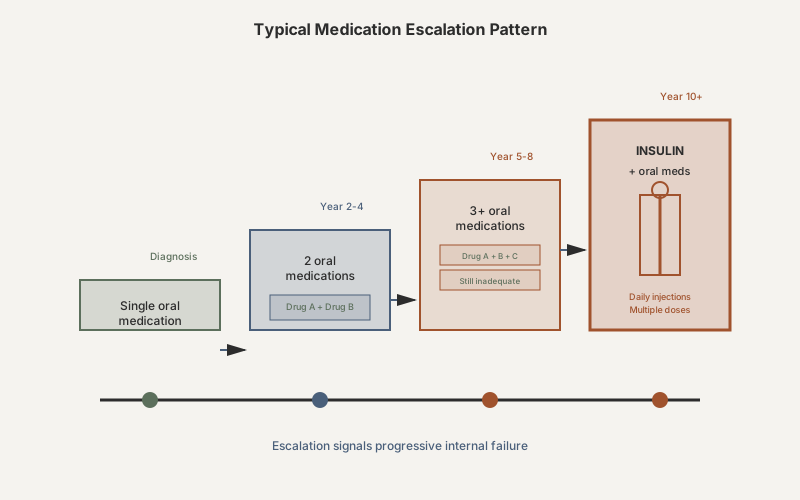
Most Type 2 diabetes patients begin treatment with a single oral medication—typically metformin. This initial intervention often produces rapid improvement. Glucose numbers drop. HbA1c reaches acceptable levels. The patient appears to have achieved control with minimal pharmaceutical intervention. Both patient and physician feel satisfied with this early success.
But within months or years, that single medication becomes insufficient. Glucose readings creep upward. HbA1c rises despite continued adherence. A second medication joins the regimen—perhaps a sulfonylurea or DPP-4 inhibitor. Control temporarily returns. Then, inevitably, a third medication becomes necessary. Then a fourth. Eventually, oral agents prove inadequate entirely, and insulin enters the picture.
This escalation pattern is so predictable that treatment protocols anticipate it. Clinical guidelines describe it as normal disease progression. Physicians reassure patients that advancing treatment reflects the natural evolution of diabetes, not personal failure. While this framing reduces patient guilt, it obscures a critical truth: medication escalation is not neutral disease progression—it is direct evidence of worsening internal metabolic dysfunction.
"From an Ayurvedic perspective, medication escalation reflects a deepening Ojas depletion — the body's vital adaptive reserve being progressively exhausted. Each escalation is not a treatment advance but a signal that the internal biological foundation requires rebuilding, not more pharmaceutical force."
Ayurvedic Clinical Lens · Diabetes Reversal Clinic
What Escalation Reveals About Internal State
When a medication that previously controlled glucose stops working, the failure indicates fundamental change in the metabolic system that medication targets. Metformin reduces hepatic glucose production and improves insulin sensitivity. If it becomes insufficient, the liver has developed deeper resistance or the degree of insulin insensitivity has worsened beyond what metformin can address.
Adding a sulfonylurea—which forces the pancreas to produce more insulin—works temporarily because increased insulin overcomes increased resistance. But this approach accelerates pancreatic exhaustion. Beta cells forced into chronic overproduction burn out faster. When the sulfonylurea eventually loses effectiveness, it signals that the pancreas can no longer maintain the forced secretion level. Functional reserve has depleted.
Each medication addition represents another metabolic system reaching failure threshold. GLP-1 agonists are added when incretin effect has deteriorated. SGLT2 inhibitors become necessary when kidneys retain excessive glucose. Insulin initiation occurs when the pancreas cannot produce adequate hormone even under pharmaceutical stimulation. The expanding medication list documents progressive multi-organ metabolic collapse.
Suppression Versus Correction
Diabetes medications operate primarily through suppression mechanisms. They do not restore normal pancreatic function, hepatic insulin sensitivity, or cellular glucose metabolism. They force temporary improvement by overriding failing systems, blocking pathological processes, or compensating for lost function through external supplementation.
This suppression strategy succeeds at controlling glucose—the visible metric—while the underlying dysfunction continues evolving. Metformin suppresses excess hepatic glucose output but does not repair the liver's insulin resistance. Sulfonylureas force insulin secretion but do not rebuild pancreatic capacity. Insulin injections replace deficient production but do not restore beta-cell function.
As internal systems deteriorate further, suppression requires increasing pharmaceutical force. One drug becomes two. Two becomes four. Oral agents become injectable. Doses escalate. The medication burden grows heavier as the body's remaining functional capacity shrinks. Eventually, patients find themselves on maximum tolerable doses of multiple medications, still struggling to maintain target glucose levels because the dysfunction has progressed beyond what suppression alone can manage.
The Metabolic Cost of Continuous Suppression
Medications themselves impose metabolic costs that worsen overall health even as they improve glucose readings. Sulfonylureas accelerate beta-cell burnout through forced hypersecretion. Insulin administration can worsen insulin resistance by creating persistently high insulin levels. Multiple medications create drug interactions that stress liver function and kidney clearance.
Weight gain frequently accompanies medication intensification—partly from insulin's anabolic effects, partly from the body's adaptation to forced glucose disposal. This weight gain worsens insulin resistance, creating a cycle where medication-induced weight gain necessitates additional medication, which causes more weight gain. The treatment contributes to the progression it attempts to control.
Hypoglycemia risk increases with medication escalation. More drugs mean more opportunities for excessive glucose suppression. Patients experience episodes of dangerously low blood sugar that trigger counterregulatory hormone release, causing subsequent glucose spikes. The body adapts to this volatility by becoming even more insulin resistant as a protective mechanism—making medication requirements increase further.
When Escalation Becomes Futile
There exists a point where medication escalation provides diminishing returns. Patients on maximum doses of multiple drugs plus high-dose insulin still struggle to maintain acceptable glucose levels. Their medication burden creates significant side effects—weight gain, hypoglycemia, gastrointestinal distress, fatigue. Yet glucose control remains marginal at best.
At this stage, further medication intensification offers little benefit. The internal metabolic dysfunction has progressed to where pharmaceutical suppression cannot adequately compensate. The liver remains profoundly resistant. The pancreas produces minimal insulin. Muscle tissue barely responds. Adding another medication or increasing doses achieves minimal additional glucose reduction while substantially increasing adverse effects.
This futility point forces recognition that the suppression approach has reached its biological limits. Continuing to escalate medications becomes an exercise in managing numbers rather than addressing health. Patients maintain marginally acceptable HbA1c through pharmaceutical heroics while experiencing progressive complications, declining quality of life, and advancing multi-organ dysfunction that medication cannot prevent.
Alternative Interpretation of Escalation
Rather than viewing medication escalation as normal disease progression to be accepted and accommodated, it can be interpreted as urgent biological feedback. The body is signaling that current intervention fails to address underlying dysfunction. Each medication addition represents another system reaching critical failure. The escalation pattern demands investigation into what drives the progression.
For many patients, escalation occurs despite adherence to dietary recommendations, regular physical activity, and appropriate medication use. They follow medical advice precisely yet still progress to complex multi-drug regimens. This suggests that standard interventions—while necessary for glucose management—do not address the deeper metabolic derangements driving disease advancement.
Recognizing escalation as a failure signal rather than expected progression changes treatment thinking. Instead of accepting each medication addition as inevitable, escalation becomes an indication that deeper intervention is necessary. The question shifts from "what medication should we add next?" to "why is the current approach failing to restore metabolic function?"
The Possibility of Reversal
If medication escalation reflects progressive internal dysfunction, then genuine improvement should manifest as medication reduction. Progressive correction that restores metabolic function enables gradual decrease in pharmaceutical requirements. Drugs become less necessary as internal systems regain capacity.
This reversal does not occur rapidly. Years of escalation cannot be undone in weeks. But systematic work addressing cellular dysfunction, organ-level failure, inflammatory burden, and metabolic coordination can progressively rebuild function. As the liver regains insulin sensitivity, metformin dose may reduce. As the pancreas recovers reserve capacity, sulfonylureas become unnecessary. As insulin resistance improves, exogenous insulin requirements decrease.
Medication reduction serves as objective evidence of biological improvement—far more meaningful than maintained glucose numbers achieved through increasing drug burden. A patient reducing from four medications to two while maintaining glucose control has achieved genuine metabolic restoration. Their internal systems are functioning better, requiring less pharmaceutical compensation. This represents true disease reversal, not just symptom management. Ayurvedic perspective: Ayurvedic intervention interprets escalating medication requirements as a diagnostic signal pointing inward — to which systems have failed, in what order, and what the correct sequence of internal correction now needs to be.