
The Pattern of Serial Short-Term Attempts
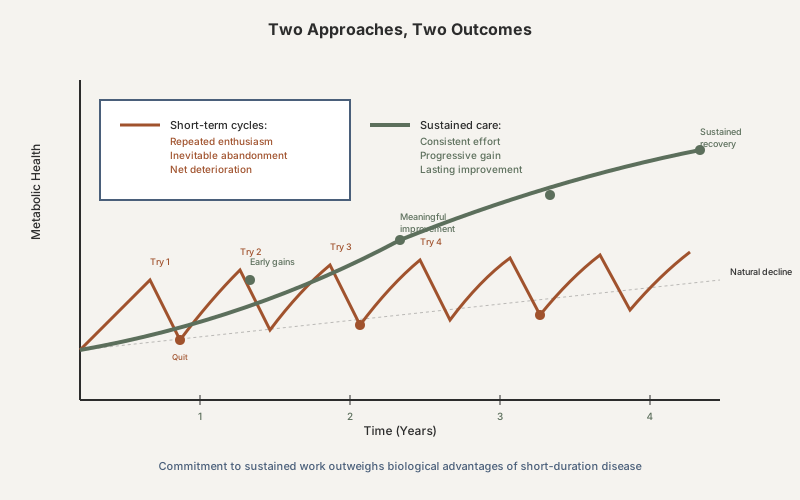
Many long-term diabetics have accumulated histories of multiple attempted interventions: crash diets followed by weight regain, intensive exercise programs abandoned after weeks, aggressive medication changes producing temporary improvement then plateau, alternative approaches tried briefly then discontinued. Each attempt begins with optimism and ends with disappointment. The pattern repeats—new intervention, initial enthusiasm, eventual failure, return to baseline or worse.
This cycling through short-term fixes creates several problems. Each failure erodes confidence and motivation. Patients begin believing nothing will work, that their diabetes is uniquely treatment-resistant, that effort is futile. The repeated failure experiences create learned helplessness that makes sustained engagement progressively more difficult. They become harder to motivate precisely when motivation becomes most critical.
Additionally, the short-term approach itself guarantees failure. Temporary interventions cannot address deep-seated pathology requiring sustained work over extended timelines. Three months of intensive effort followed by return to previous patterns allows no genuine metabolic restoration. The body barely begins adapting before the intervention ceases and dysfunction reasserts.
The short-term mindset also prevents learning from experience. Each failed attempt gets dismissed as "that didn't work" without analysis of what was attempted, why it failed, what was learned. Without extracting lessons from failures, patients repeat the same fundamental errors with superficially different interventions. The pattern perpetuates because its causes go unexamined.
"Ayurveda calls this distinction Chikitsa vs Upachara — genuine treatment that addresses root cause versus symptomatic management that provides temporary relief. The willingness to pursue Chikitsa, with all its demands on time and commitment, is what separates patients who recover from those who plateau."
Ayurvedic Clinical Lens · Diabetes Reversal Clinic
What Serious Long-Term Care Requires
Genuine deep metabolic correction demands commitment fundamentally different from short-term attempts. It requires accepting that meaningful improvement will take months to years, not weeks. It demands consistency over that extended timeline—not perfection, but sustained reasonable adherence without repeated abandonment and restart cycles. It necessitates tolerance for gradual progress and extended plateaus.
The timeline reality proves difficult for many patients to accept. Modern culture conditions expectation of rapid results. Diabetes itself developed over years, but reversal expectation centers on months. This timeline mismatch creates inevitable frustration when early months show modest improvement while significant recovery requires a year or more of sustained work.
Serious care also requires life reorganization to accommodate intervention demands. Meal planning and preparation take time. Exercise requires scheduling and consistency. Monitoring demands attention. Medical appointments increase. The diabetes correction work must integrate into daily life rather than existing as temporary overlay on unchanged routine. This integration requires permanent lifestyle adjustment, not short-term sacrifice.
Financial commitment proves significant. Deep metabolic correction often involves expenses beyond standard care: specialized consultations, specific interventions, quality food choices, monitoring equipment, time away from work. These costs accumulate over months and years. Patients must be willing and able to sustain this investment without guarantee of specific outcomes.
Distinguishing Serious Intent From Wishful Thinking
How does one distinguish genuine readiness for serious long-term work from another iteration of short-term enthusiasm that will fade? Several indicators suggest authentic commitment rather than temporary motivation spike: concrete life changes already implemented before seeking advanced intervention, realistic expectations about timelines and effort required, stable life circumstances enabling sustained engagement, history of maintaining other long-term commitments successfully.
Conversely, certain patterns predict short-term engagement: seeking intervention during crisis with plan to relax effort once crisis passes, expecting rapid dramatic transformation with minimal sustained effort, unstable life circumstances preventing consistent engagement, history of abandoning commitments when they become difficult, focus on specific quick outcomes rather than sustainable health improvement.
Honest self-assessment proves essential. Patients must ask: Am I genuinely ready to reorganize life around health restoration for years? Can I tolerate slow progress and extended plateaus? Will I maintain effort when enthusiasm wanes and work becomes routine? Do I have stable circumstances and support enabling sustained commitment? Is my motivation intrinsic health improvement or external pressure that will diminish?
This self-assessment is not about worthiness but readiness. Lack of readiness does not make someone a bad patient but rather indicates that current life stage may not accommodate intensive long-term work. Acknowledging unreadiness allows appropriate timing—perhaps addressing life circumstances first, then pursuing metabolic correction when genuine capacity exists.
The Psychology of Sustained Commitment
Maintaining effort over years requires different psychological approach than short-term motivation. Initial enthusiasm inevitably fades. The work becomes routine, sometimes tedious. Results plateau. Life presents competing demands. Sustained commitment depends on internal values alignment rather than external motivation or excitement.
Patients who succeed long-term typically internalize health as core value rather than viewing diabetes correction as temporary project. The work becomes part of identity—"I am someone who takes care of my metabolic health"—rather than something they are doing until a goal is reached. This identity-level integration creates consistency that motivation-based approaches cannot sustain.
They also develop sustainable rather than extreme approaches. Extreme dietary restriction, grueling exercise regimens, obsessive monitoring—these intensive approaches burn out quickly. Sustainable correction involves moderate consistent changes that can continue indefinitely without requiring heroic daily effort. The goal is integration into normal life, not temporary extremism.
Additionally, successful long-term patients reframe setbacks and plateaus. Rather than viewing lack of progress as failure, they recognize biological timelines require patience. When motivation wanes, they rely on habit and commitment rather than abandoning effort. They understand that consistency matters more than perfection, that occasional lapses do not negate sustained effort's value.
When Not Pursuing Reversal Is Appropriate
For patients not ready for serious long-term commitment, attempting intensive reversal work proves counterproductive. It sets up another failure experience. It wastes resources. It potentially worsens outcomes through creating additional demotivation. Honest acknowledgment that serious correction is not currently appropriate serves better than forcing premature attempts.
Alternative approaches become more suitable: maintaining with standard care that requires less intensive engagement, focusing on preventing acute complications rather than reversal, working on life circumstances that currently prevent serious health commitment, addressing psychological barriers to sustained behavior change before attempting metabolic correction.
This is not giving up but rather recognizing that timing matters. A patient who acknowledges current unreadiness and focuses on building readiness—stabilizing life, developing consistency, addressing barriers—may later pursue reversal successfully. One who forces premature attempts likely reinforces failure patterns making eventual success less likely.
The question is not "Can I muster enthusiasm for another attempt?" but rather "Am I genuinely ready to reorganize life around health for years?" If the honest answer is no, that information guides appropriate care pathway better than pretending readiness that does not actually exist.
What Advanced Correction Offers—And Demands
For appropriate candidates with genuine readiness, deep metabolic correction offers possibility of outcomes that standard care cannot provide: substantial medication reduction, meaningful HbA1c improvement beyond what protocols achieve, slowed or halted complication progression, enhanced metabolic stability and resilience, improved quality of life through better energy and reduced symptoms.
But these outcomes require proportional investment. The work is intensive. The timeline is extended. The demands are substantial. The process is challenging. Success is not guaranteed even with maximum effort. Improvement varies individually. The work never truly ends—maintenance requires ongoing commitment even after achieving improvement.
Patients considering this path must weigh realistic benefits against realistic costs. For some, the trade-off clearly favors pursuit—their diabetes is advanced, standard care is failing, they have capacity for intensive work, and potential benefits justify required investment. For others, costs exceed realistic benefits—their disease is mild, standard care works adequately, life circumstances prevent intensive engagement, or health priorities lie elsewhere.
Neither choice is wrong. Both serious long-term correction and well-managed standard care are legitimate approaches. The critical factor is matching approach to individual reality: disease severity, biological reversal potential, life circumstances, resources, priorities, and crucially—genuine readiness for sustained intensive engagement versus need for less demanding management approach.
Making the Commitment Decision
The decision to pursue serious long-term metabolic correction should not be made impulsively or during crisis. It requires sober assessment of multiple factors: biological appropriateness (disease severity, reversal potential, absence of absolute contraindications), life readiness (stable circumstances, adequate resources, sustainable time availability), psychological capacity (tolerance for delayed gratification, consistency ability, resilience through plateaus), and realistic benefit-cost analysis.
If assessment reveals genuine biological potential and authentic readiness, the investment may prove worthwhile despite demands. If assessment reveals marginal biological potential or questionable readiness, standard care likely serves better. If factors are mixed—good biological potential but uncertain readiness, or marginal biology but strong commitment—deeper evaluation and possibly trial engagement helps clarify appropriate pathway.
What matters most is honest matching of approach to reality rather than wishful thinking that effort alone overcomes biological limits or that commitment will magically appear when demanded. Diabetes has already taught painful lessons about limits. Reversal pursuit should benefit from those lessons rather than repeating patterns of unrealistic expectation followed by inevitable disappointment. Ayurvedic perspective: Sustained Ayurvedic metabolic correction is demanding precisely because it works at the level where disease is actually stored — in tissue memory, in organ function, in the body's learned patterns of dysfunction. That depth requires corresponding commitment.