
The Illusion of Isolated Complications
Medical terminology fragments diabetes complications into distinct categories: retinopathy affects eyes, nephropathy damages kidneys, neuropathy compromises nerves, cardiovascular disease involves heart and vessels. This classification system—necessary for clinical communication—creates the impression that complications are separate conditions happening to different organs through independent mechanisms.
This organ-specific framing misleads. When a diabetic patient develops retinopathy, the problem is not isolated to retinal capillaries. Those visible retinal changes reflect systemic microvascular dysfunction affecting capillary beds throughout the body. The eyes simply provide a window where damage can be directly observed through ophthalmoscopy. The kidneys, nerves, heart, and other organs are experiencing parallel microvascular injury—invisible but equally real.
Similarly, when kidney function declines, the pathology extends beyond renal failure. Declining kidney function disrupts fluid balance, worsens blood pressure control, alters medication clearance, affects bone metabolism, and creates anemia through reduced erythropoietin production. Each of these secondary effects cascades through other organ systems, creating additional complications. The "kidney complication" is actually a multi-system disaster radiating from initial renal injury.
Understanding complications as systemic rather than isolated changes how disease progression is conceptualized and addressed. Treating retinopathy as an eye problem while ignoring broader microvascular dysfunction provides incomplete benefit. Addressing one failing organ while others deteriorate merely delays inevitable multi-organ collapse. Effective intervention must recognize and address the interconnected nature of diabetic complications.
Metabolic Networks and Cascading Failures
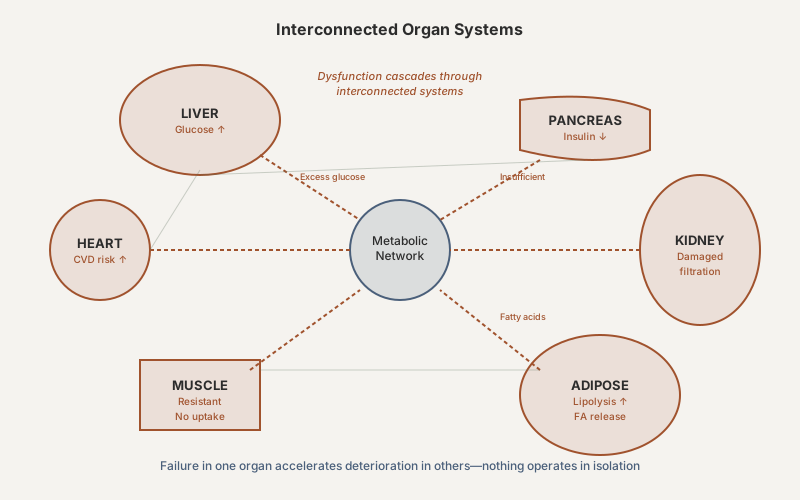
The human body operates as an integrated metabolic network, not a collection of independent organs. Liver function affects muscle metabolism. Adipose tissue influences pancreatic function. Kidney health impacts cardiovascular system. Each organ communicates with others through hormones, metabolites, and signaling molecules. This interconnection enables coordinated metabolic regulation in health but allows dysfunction to propagate in disease.
In diabetes, initial dysfunction in one organ creates metabolic stress on others. When the pancreas loses insulin secretory capacity, the liver must attempt compensation through altered glucose production patterns—often worsening hepatic insulin resistance. When muscle develops insulin resistance, more glucose remains in circulation, increasing glycemic load on kidneys and accelerating glomerular damage. When adipose tissue becomes dysfunctional and releases excessive fatty acids, those fatty acids infiltrate and damage liver, muscle, and pancreatic beta cells.
These interconnections create positive feedback loops where initial damage accelerates through self-reinforcing cycles. Kidney dysfunction elevates blood pressure, which worsens kidney damage further. Cardiovascular disease reduces tissue perfusion, which impairs cellular glucose metabolism, which worsens hyperglycemia, which accelerates cardiovascular disease. Retinal ischemia from capillary loss triggers growth factor release that promotes abnormal vessel formation, which hemorrhages and causes further ischemia.
The systemic nature means that addressing single complications in isolation provides temporary relief while underlying network dysfunction continues propagating damage to other systems. A patient receiving laser photocoagulation for proliferative retinopathy gains temporary vision preservation but remains vulnerable to kidney failure, heart disease, and stroke from the same microvascular and metabolic pathology driving retinal damage.
Shared Pathological Mechanisms Across Organs
Diabetic complications in different organs arise from common underlying mechanisms operating systemically. Chronic hyperglycemia damages all tissues simultaneously through glucose toxicity, oxidative stress, and advanced glycation end product formation. Chronic inflammation activates throughout the body, not selectively in specific organs. Endothelial dysfunction affects all vascular beds. These shared mechanisms guarantee that damage occurs broadly rather than in isolated locations.
Microvascular complications—retinopathy, nephropathy, neuropathy—share nearly identical pathophysiology. Capillary endothelial damage from hyperglycemia, basement membrane thickening from glycation, and vascular occlusion from inflammatory processes occur in retina, kidney glomeruli, and nerve vasa nervorum through identical mechanisms. The organs differ in their sensitivity thresholds and manifestation patterns, but the underlying destructive processes are the same.
Macrovascular complications—coronary disease, stroke, peripheral arterial disease—reflect accelerated atherosclerosis driven by the same metabolic abnormalities promoting microvascular damage. Insulin resistance, dyslipidemia, chronic inflammation, and oxidative stress damage arterial walls throughout the vascular tree. Whether atherosclerosis manifests as coronary stenosis, carotid plaque, or femoral artery occlusion depends partly on individual anatomical variation but arises from systemic vascular pathology.
This mechanistic commonality explains why complications cluster. Patients with retinopathy have dramatically increased risk of nephropathy and neuropathy—not coincidentally but because all three reflect the same microvascular destruction operating in different locations. Patients with coronary disease face elevated stroke risk because the same atherosclerotic process affects coronary and cerebral vessels simultaneously. Complications do not occur randomly but cluster predictably based on shared pathological mechanisms.
The Cardiovascular-Renal-Metabolic Axis
Heart, kidney, and metabolic function form a particularly tightly coupled system where dysfunction in any component rapidly affects the others. This cardiovascular-renal-metabolic axis represents a critical nexus where diabetes complications intersect and amplify each other.
Kidney dysfunction elevates blood pressure through fluid retention and activation of the renin-angiotensin system. Elevated blood pressure accelerates cardiovascular disease and worsens kidney damage through mechanical stress on glomeruli. Cardiovascular disease reduces cardiac output, decreasing renal perfusion and accelerating kidney failure. Each organ's dysfunction worsens the other in escalating cycles.
Metabolic dysfunction drives both cardiovascular and renal complications while being worsened by them. Insulin resistance and hyperglycemia damage both heart and kidney. But declining kidney function impairs insulin clearance, paradoxically worsening hyperinsulinemia and insulin resistance. Cardiovascular disease reduces tissue perfusion, impairing cellular glucose metabolism and worsening glycemic control. The metabolic disorder both causes and results from cardiovascular-renal dysfunction.
Clinical manifestations of this interconnection include cardiorenal syndrome—where heart failure and kidney failure coexist and drive each other's progression. Diabetics with even mild kidney dysfunction show dramatically elevated cardiovascular mortality compared to those with normal renal function. Conversely, diabetics with heart disease develop kidney failure at accelerated rates. The two complications are so intertwined that treating one without addressing the other provides minimal benefit.
Cognitive Decline as Systemic Complication
Diabetes substantially increases risk of cognitive impairment and dementia—complications increasingly recognized as integral to the disease rather than coincidental. Brain dysfunction in diabetes reflects the same vascular, inflammatory, and metabolic pathology affecting other organs. Small vessel disease damages cerebral microvasculature. Chronic inflammation activates neuroinflammatory pathways. Glucose dysregulation and insulin resistance directly impair neuronal function.
The systemic nature becomes evident in associations between cognitive decline and other complications. Diabetics with retinopathy show higher rates of cognitive impairment than those without retinopathy. Those with kidney disease demonstrate accelerated cognitive decline. Patients with multiple complications face the highest dementia risk. These associations reflect shared microvascular pathology affecting brain, retina, kidney, and other organs simultaneously.
Additionally, cardiovascular disease—itself a systemic complication—drives cognitive decline through reduced cerebral perfusion and increased stroke risk. Kidney dysfunction contributes through uremic toxin accumulation affecting brain function. The cognitive complication emerges from convergence of multiple pathological processes operating systemically throughout the body.
Why Complication Screening Misses Early Systemic Damage
Standard diabetes complication screening examines individual organs: dilated eye exams for retinopathy, urine albumin for nephropathy, monofilament testing for neuropathy, lipid panels and stress tests for cardiovascular risk. This organ-by-organ approach catches complications once they reach detectable thresholds in specific locations but misses the earlier systemic dysfunction preceding organ-specific manifestations.
A patient may show normal retinal exam, no proteinuria, and intact sensation yet have substantial subclinical microvascular dysfunction throughout the body. Endothelial dysfunction, early glycation, oxidative stress, and inflammatory activation operate systemically long before producing detectable changes in screened organs. By the time retinopathy appears on fundoscopy, years of vascular damage have already occurred throughout the microvasculature.
More sophisticated assessment would evaluate systemic markers of metabolic dysfunction rather than waiting for organ-specific complications: inflammatory markers, oxidative stress indicators, endothelial function measurements, insulin resistance indices. These systemic parameters reveal dysfunction before it manifests as traditional complications, allowing earlier intervention when reversibility remains possible.
Implications for Prevention and Treatment
Recognition of systemic interconnection demands prevention strategies addressing the entire metabolic network rather than targeting individual complications. Interventions reducing overall metabolic dysfunction—improved glycemic control, insulin sensitivity enhancement, inflammatory reduction, oxidative stress mitigation—protect against all complications simultaneously through correction of shared underlying pathology.
This systemic approach proves more effective than complication-specific treatments addressing individual organs after damage manifests. Laser therapy for retinopathy prevents vision loss but does nothing for kidney, nerve, or cardiovascular disease. Dialysis for kidney failure keeps patients alive but allows continued deterioration in other systems. ACE inhibitors for proteinuria slow nephropathy progression but provide limited benefit for retinopathy or neuropathy.
Conversely, interventions targeting core metabolic dysfunction prevent multiple complications through single mechanism. Weight loss reducing insulin resistance protects kidneys, retinas, nerves, and cardiovascular system simultaneously. Anti-inflammatory approaches reduce damage across all affected organs. Comprehensive metabolic correction provides multi-organ protection that organ-specific treatments cannot match.
Individual patients show different patterns in which complications develop first and progress fastest, requiring personalized assessment of where systemic dysfunction manifests most severely. But regardless of complication pattern, effective treatment must address the underlying systemic pathology driving all complications rather than treating manifestations one organ at a time.
The Network Requires Network-Level Intervention
The interconnected nature of diabetic complications means that partial intervention addressing some but not all pathological mechanisms provides incomplete benefit. Improving glucose control while ignoring inflammation leaves inflammatory damage active. Reducing inflammation while maintaining insulin resistance allows metabolic dysfunction to continue. Addressing peripheral complications while neglecting cardiovascular disease leaves the highest mortality risk unaddressed.
Truly effective diabetes management requires simultaneous multi-faceted intervention: glucose normalization with minimal variability, insulin sensitivity restoration across multiple tissues, inflammatory burden reduction, oxidative stress mitigation, vascular function improvement, and restoration of normal inter-organ metabolic communication. This comprehensive approach addresses the network as a network rather than treating nodes individually.
Such comprehensive correction demands sophistication beyond standard diabetes care focused primarily on glucose management. It requires understanding how liver, muscle, adipose, pancreas, kidney, heart, and brain interact metabolically. It necessitates intervention sequences that address dysfunction in appropriate order based on individual failure patterns. It demands patience for the extended timelines required to restore function across multiple interconnected systems.