
The Appeal and Limitation of Standardized Protocols
Clinical protocols provide valuable structure for diabetes management. They ensure minimum standards of care, facilitate communication between providers, and allow quality measurement. Guidelines specify when to initiate medications, target glucose levels, screening schedules for complications. This standardization prevents oversight and ensures basic competence across variable clinical settings.
But protocols necessarily apply average approaches to populations. They work reasonably well for patients whose disease pattern approximates population average. A newly diagnosed patient with typical insulin resistance pattern, no complications, and standard progression responds predictably to protocol-directed treatment. The protocolized approach serves them adequately.
Long-term diabetes creates profound individual variation that protocols cannot address. Each patient has unique sequence of organ failures, distinct pattern of complications, individual remaining functional capacity, and personal constellation of genetic and environmental factors influencing disease expression. By the time diabetes has progressed fifteen years, patients with identical HbA1c may have entirely different internal pathology requiring entirely different intervention.
Applying standardized protocols to highly individualized pathology produces mediocre results. Some patients improve adequately with protocol care—they happen to match protocol assumptions reasonably well. Others plateau despite perfect protocol adherence—their specific pathology pattern requires intervention the protocol does not provide. Still others deteriorate under protocol management that actually worsens their individual dysfunction pattern. The protocol's population-average assumptions fail at individual-patient level.
"This is precisely what Prakriti assessment addresses in Ayurveda — determining the individual's constitutional vulnerabilities before deciding on a treatment approach. No two patients have the same metabolic failure pattern, and no uniform protocol can account for that variation."
Ayurvedic Clinical Lens · Diabetes Reversal Clinic
Patterns of Predominant Organ Involvement
While diabetes is systemic, certain organs often show disproportionate dysfunction in individual patients. One patient develops severe neuropathy with minimal retinopathy. Another shows advanced kidney disease but intact nerve function. A third manifests cardiovascular complications early while microvascular beds remain relatively preserved. These varying complication patterns reflect different failure sequences and vulnerabilities.
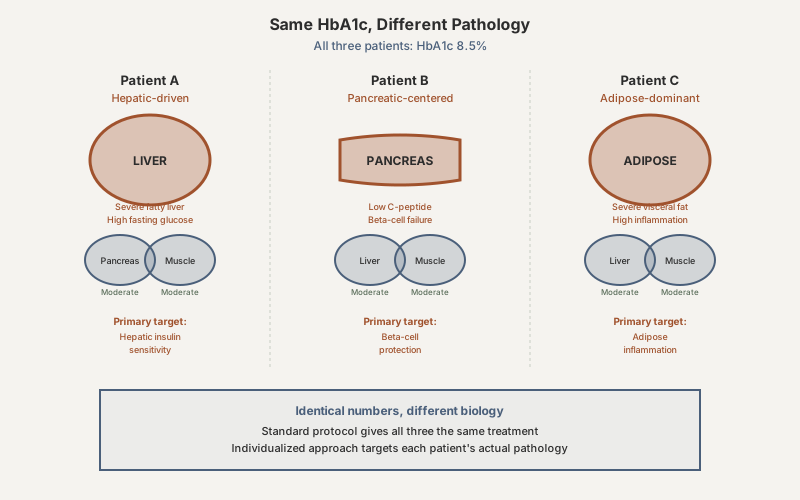
Some patients show predominant hepatic involvement: severe fatty liver, marked fasting hyperglycemia, dyslipidemia, insulin resistance centered in hepatic glucose production. Their pathology driver is liver dysfunction. Treatment maximally addressing hepatic insulin resistance, fatty liver reversal, and hepatic metabolic correction produces dramatic benefit. Standard protocol focusing primarily on pancreatic function provides minimal help because liver is their problem.
Others demonstrate primary pancreatic insufficiency: low C-peptide, minimal insulin reserve, progressive loss of glycemic control despite aggressive insulin sensitizers. Their beta cells are failing while peripheral tissues retain decent insulin sensitivity. They need pancreatic protection and preservation as top priority. Protocol pushing insulin sensitizers they do not primarily need while inadequately protecting remaining beta-cell function misses their core problem.
Still others show adipose-centric pathology: severe visceral obesity, profound insulin resistance across all tissues, very high inflammatory markers, extensive ectopic fat deposition. Adipose tissue malfunction drives their entire metabolic cascade. Until adipose dysfunction is addressed—reducing visceral fat, normalizing adipokine secretion, clearing ectopic lipid—other interventions battle against continuous metabolic assault from dysfunctional fat tissue.
Genetic and Constitutional Variation
Genetic factors create substantial variation in how diabetes manifests. Some individuals carry genetic variants making them particularly susceptible to beta-cell stress—their pancreatic vulnerability means early beta-cell loss with relatively mild insulin resistance. Others have genetic propensity for severe insulin resistance but robust beta-cell function that maintains for years. These genetic differences create fundamentally different disease biology requiring different therapeutic approaches.
Inflammatory genetics influence disease pattern. Individuals with pro-inflammatory genetic variants develop high-inflammation phenotypes where inflammatory pathology dominates clinical picture. They show elevated inflammatory markers, aggressive atherosclerosis, severe insulin resistance driven by inflammation. Anti-inflammatory intervention proves critical for them while being less essential for patients with low-inflammation genetics who develop diabetes through other mechanisms.
Metabolic genetics affect nutrient processing. Some individuals show impaired fat oxidation—they cannot efficiently burn fatty acids, leading to ectopic fat accumulation even with moderate intake. Others have carbohydrate sensitivity—they develop severe hyperglycemia with carbohydrate loads that others tolerate. These genetic differences demand individualized nutritional approaches that population-average dietary guidelines cannot provide.
Constitutional factors beyond single genes also matter. Body composition, autonomic nervous system tone, stress response patterns, circadian rhythm robustness—these characteristics vary widely and influence both disease development and treatment response. Protocols ignoring constitutional variation apply one-size-fits-all solutions to people with fundamentally different biology.
Environmental and Behavioral Pattern Diversity
Environmental stressors shape diabetes progression individually. Chronic psychological stress activates different pathways than sleep deprivation, which differs from shift work disruption, which differs from social isolation. Each stressor pattern creates distinct metabolic consequences requiring specific intervention beyond generic stress reduction advice.
Dietary patterns preceding diagnosis influence subsequent pathology. Someone whose diabetes emerged from years of processed food consumption develops different inflammatory and metabolic patterns than someone eating whole foods but excessive quantity. The former needs intensive inflammatory reduction and gut microbiome restoration; the latter primarily needs portion control and metabolic retraining. Identical protocol cannot optimally address both.
Physical activity history matters profoundly. Sedentary individuals have muscle insulin resistance from disuse atrophy and mitochondrial depletion. Former athletes may retain good muscle function but show hepatic or adipose pathology. Weekend warriors create different metabolic patterns than consistent moderate exercisers. These activity history differences create varied muscular and mitochondrial status requiring individualized exercise prescription that generic guidelines cannot provide.
Medication Response Variability
Individual patients show dramatic variation in medication response. Metformin produces 2% HbA1c reduction in some patients, 0.5% in others, with still others experiencing no benefit or intolerable side effects. This variability reflects genetic differences in drug metabolism, individual organ dysfunction patterns, and unique metabolic states. Protocols assuming average response fail to optimize dosing for individual metabolism.
Drug interactions vary based on individual coordination patterns. In some patients, adding one medication enhances another's effectiveness through complementary mechanisms. In others, the same combination produces adverse interactions. The specific metabolic context determines whether drug combinations synergize or interfere. Protocol-driven polypharmacy ignores these individual interaction patterns.
Side effect susceptibility varies dramatically. Gastrointestinal effects, hypoglycemia risk, weight changes, fatigue—all show wide individual variation. What one patient tolerates easily proves intolerable for another. Protocols pushing toward medication goals without accounting for individual tolerance create impossible treatment burdens that guarantee non-adherence.
The Timing and Duration Dimension
Disease duration alone provides insufficient information—what happened during those years matters more. Ten years of poorly controlled diabetes creates vastly different pathology than ten years of reasonable control. Patients with identical disease duration show dramatic variation in accumulated damage based on control quality during progression.
Additionally, the velocity of progression varies. Some patients deteriorate rapidly over five years while others show gradual decline over twenty years to reach similar HbA1c. Rapid progressors likely have more aggressive underlying pathology—perhaps genetic predisposition, severe inflammatory drive, or catastrophic beta-cell loss. Slow progressors may have intrinsic protective factors delaying decline. These progression rate differences indicate fundamentally different disease biology requiring different intervention intensity.
Timing of intervention attempts matters. A patient who attempted intensive management early, achieved some improvement, then plateaued differs from one who never pursued aggressive control. The former has some restoration capacity demonstrated by initial response; the latter's lack of previous intervention means unknown correction potential. Response history provides critical information that protocols treating all patients identically ignore.
Why One Protocol Cannot Optimize All Patterns
Given the dimensions of variation—organ involvement pattern, genetic constitution, environmental factors, medication responses, progression history—the idea that single protocol can optimize treatment for all patients becomes obviously inadequate. A protocol designed around population averages necessarily mismatches most individual patients who deviate from average in multiple dimensions.
Mathematical reality compounds the problem. If five major dimensions show variation, and each dimension has just three common patterns, that creates 243 distinct patient types. No protocol can address 243 distinct pathology patterns. Attempting to force all patterns into one approach means most patients receive suboptimal treatment because their specific pattern is not adequately addressed.
This is not criticism of protocols for their intended purpose—ensuring minimum competent care. But it explains why protocol-adherent treatment often plateau at mediocre outcomes for complex, long-duration diabetes. The protocol provides basic management but cannot optimize for individual pathology patterns that require pattern-specific intervention.
What Individualized Assessment Provides
Truly individualized assessment identifies each patient's specific pattern across all relevant dimensions. Which organs show predominant dysfunction? What genetic and constitutional factors influence disease expression? What environmental stressors are active? How has the disease progressed historically? What medication responses have been observed? This comprehensive pattern recognition enables intervention design matching actual individual pathology.
For the hepatic-predominant patient, assessment directs primary focus to fatty liver reversal, hepatic insulin sensitivity restoration, and reduction of factors driving hepatic glucose production. For pancreatic-insufficient patient, intervention prioritizes beta-cell protection and preservation while managing with appropriate insulin supplementation. For adipose-driven patient, visceral fat reduction and adipose inflammation control become primary targets.
Assessment also predicts correction potential—which systems retain reversibility, which have crossed into irreversible damage, what realistic goals match actual biology. This prevents pursuit of impossible targets while identifying achievable improvements that protocol assumptions might miss.
The Cost-Benefit of Personalization
Individualized assessment and treatment design requires more time, expertise, and resources than protocol application. This investment is unnecessary for early, uncomplicated diabetes where protocols work adequately. But for complex, long-duration, treatment-resistant diabetes, the personalization investment pays substantial dividends through achieving improvement that protocol approaches cannot.
Consider the patient who has followed protocols perfectly for ten years with minimal improvement, requiring progressively escalating medications while complications develop. Continuing protocol approach offers minimal hope. Comprehensive individual assessment identifying their specific failure pattern and designing matched intervention provides possibility of breaking plateau and achieving meaningful correction.
The personalization approach is not standard care for all diabetes but rather advanced intervention for those whom standard approaches have failed. It represents next-level sophistication appropriate when first-level protocol care proves insufficient. The complexity matches disease complexity; the individualization addresses individual variation that protocols cannot accommodate. Ayurvedic perspective: Ayurvedic clinical practice is built on this individualisation: the same disease in two patients may require entirely different intervention sequences because the constitutional pattern, the dominant Dosha, and the sequence of organ involvement differ.