
The Liver's Central Metabolic Role
The liver functions as the body's primary metabolic processing center, performing hundreds of essential functions related to glucose, lipid, and protein metabolism. In glucose regulation specifically, the liver maintains blood sugar stability between meals through gluconeogenesis—the synthesis of new glucose from non-carbohydrate precursors—and glycogenolysis—the breakdown of stored glycogen into glucose. This hepatic glucose production balances glucose disposal by tissues, preventing dangerous hypoglycemia during fasting.
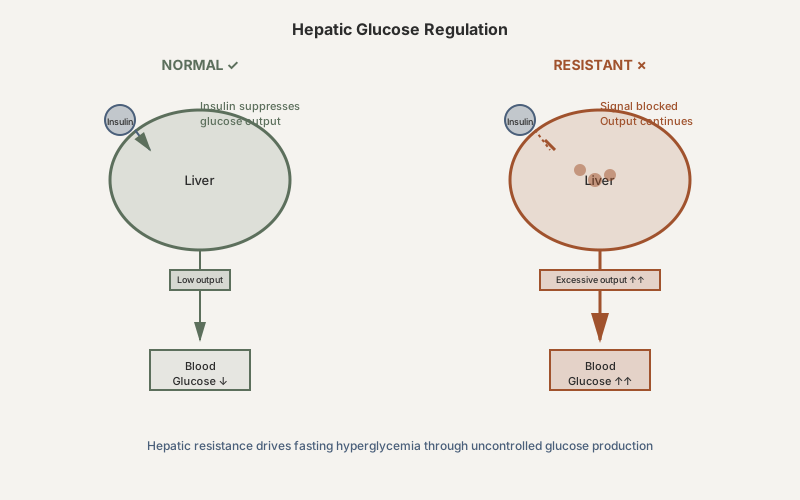
Insulin normally suppresses hepatic glucose production. When blood sugar rises after eating, insulin signals the liver to stop making glucose and start storing it as glycogen. This insulin-mediated suppression is critical for glucose control. Without it, the liver continues pouring glucose into circulation even when blood sugar is already elevated—like leaving a faucet running while a sink overflows.
In Type 2 diabetes, hepatic insulin resistance disrupts this regulatory mechanism. The liver loses its sensitivity to insulin's suppressive signal. It continues producing glucose inappropriately, adding endogenous glucose to whatever arrives from diet. This hepatic overproduction accounts for most of the elevated fasting glucose characteristic of diabetes. Morning blood sugar readings—after eight hours without food—reflect primarily what the liver has been producing overnight.
The centrality of hepatic dysfunction to diabetes pathophysiology cannot be overstated. While cellular insulin resistance occurs throughout the body, hepatic resistance has disproportionate impact because the liver produces and releases glucose directly into circulation. A muscle cell that resists insulin fails to take up glucose, worsening hyperglycemia. But a liver cell that resists insulin actively produces glucose, directly driving hyperglycemia.
Mechanisms of Hepatic Insulin Resistance
Hepatic insulin resistance develops through multiple converging mechanisms. Fat accumulation in liver cells—hepatic steatosis or "fatty liver"—is both cause and consequence of insulin resistance. Excess fat storage triggers inflammatory responses within hepatocytes. These inflammatory pathways directly interfere with insulin signaling, degrading the cellular machinery needed to respond to insulin.
The mechanism operates at the molecular level through interference with insulin receptor substrate proteins—particularly IRS-1 and IRS-2. These proteins normally transmit insulin's signal from the receptor to downstream effectors that suppress glucose production. In fatty, inflamed hepatocytes, stress-activated kinases phosphorylate IRS proteins at wrong locations, blocking their ability to propagate insulin signals. The insulin receptor may bind insulin normally, but the signal dies before reaching the nuclear transcription factors that control gluconeogenic enzyme expression.
Mitochondrial dysfunction worsens hepatic resistance. Hepatocytes require substantial energy for their intense metabolic activity. When mitochondria become impaired—through oxidative damage, genetic defects, or chronic metabolic stress—energy production declines. Low cellular energy state triggers compensatory metabolic responses that prioritize glucose production as an energy source, overriding insulin's suppressive signals.
Chronic hyperinsulinemia itself paradoxically worsens hepatic insulin resistance. The liver, exposed to persistently elevated insulin levels, downregulates insulin receptors and suppresses signaling pathways as a protective adaptation. What begins as compensatory hyperinsulinemia to overcome initial resistance eventually deepens that resistance through this negative feedback. The more insulin circulates, the less the liver responds—creating a self-reinforcing cycle of worsening dysfunction.
Fatty Liver and Metabolic Dysfunction
Non-alcoholic fatty liver disease—the accumulation of fat in hepatocytes unrelated to alcohol consumption—affects the majority of long-term diabetics. This steatosis is not benign fat storage. It represents active metabolic pathology that drives insulin resistance and glucose dysregulation.
Fat accumulates in liver when fatty acid delivery exceeds the liver's capacity to oxidize or export it. In insulin-resistant states, adipose tissue releases excessive free fatty acids into circulation. The liver takes up these fatty acids and attempts to process them. But when delivery overwhelms oxidative capacity, fatty acids are esterified into triglycerides and stored as lipid droplets within hepatocytes.
These lipid droplets are metabolically active, not inert storage. They generate lipotoxic intermediates—partially metabolized fatty acid products that damage cellular structures and activate inflammatory pathways. They increase oxidative stress by overwhelming mitochondrial capacity. They physically disrupt normal hepatocyte architecture, impairing cellular function. The result is progressive hepatocyte damage and inflammation.
In advanced cases, fatty liver progresses to non-alcoholic steatohepatitis—active inflammation and hepatocyte injury that can lead to fibrosis and eventually cirrhosis. Even before reaching these severe stages, hepatic steatosis profoundly impairs the liver's insulin responsiveness and glucose regulatory capacity. A fatty liver is an insulin-resistant liver, unable to appropriately suppress glucose production regardless of circulating insulin levels.
The Liver-Muscle-Adipose Triangle
Hepatic insulin resistance does not occur in isolation. It exists within an interconnected metabolic network involving muscle, adipose tissue, and the liver itself. Muscle insulin resistance reduces glucose disposal, leaving more glucose in circulation. This persistent hyperglycemia stresses the liver and worsens its resistance.
Adipose tissue dysfunction contributes critically. In insulin-resistant adipose tissue, hormone-sensitive lipase—the enzyme that breaks down stored fat—becomes resistant to insulin's suppressive effect. Fat tissue releases excessive free fatty acids continuously, even in the fed state when lipolysis should be suppressed. These fatty acids flood the liver, driving hepatic steatosis and worsening hepatic insulin resistance.
The liver responds to this metabolic chaos by increasing triglyceride synthesis and secretion of very-low-density lipoproteins. But these lipoproteins deliver fatty acids back to muscle and adipose tissue, worsening their insulin resistance. The three tissues—liver, muscle, adipose—drive each other into progressively deeper dysfunction through this vicious cycle.
Breaking this cycle requires coordinated intervention across all three tissues. Improving only hepatic function while muscle and adipose remain severely resistant provides limited benefit—the dysfunctional peripheral tissues continue driving hepatic stress. Similarly, addressing peripheral resistance while ignoring hepatic dysfunction leaves the liver producing excessive glucose despite improved peripheral disposal.
Clinical Manifestations of Hepatic Resistance
Patients with significant hepatic insulin resistance demonstrate characteristic clinical patterns. Fasting glucose is disproportionately elevated compared to post-meal glucose. While both are abnormal, the morning fasting reading may be 40-60 mg/dL higher than what would be predicted from overall HbA1c. This reflects the liver's overnight glucose overproduction.
Dawn phenomenon—marked glucose rise in early morning hours before waking—occurs frequently. This results from the liver's aggressive glucose production in response to normal nocturnal hormonal shifts, combined with inability of insulin to suppress that production. Patients wake with glucose 30-50 mg/dL higher than bedtime levels despite no food intake.
Triglyceride levels often elevate significantly in hepatic resistance. The liver overproduces VLDL particles, raising blood triglycerides. HDL cholesterol typically declines. This dyslipidemic pattern—high triglycerides, low HDL—strongly suggests hepatic metabolic dysfunction even before fatty liver is evident on imaging.
Metformin responsiveness provides another clinical clue. Metformin's primary mechanism involves suppressing hepatic glucose production. Patients with predominant hepatic resistance often respond dramatically to metformin initiation—fasting glucose drops substantially while post-meal glucose improves less dramatically. This selective fasting glucose improvement documents the drug's hepatic effect and confirms that hepatic overproduction was a major driver of hyperglycemia.
Why Standard Interventions Often Fail
Dietary carbohydrate restriction—a common diabetes intervention—addresses glucose input but does not necessarily improve hepatic insulin resistance. The liver may respond to reduced dietary glucose by increasing gluconeogenesis, converting amino acids and other precursors into glucose. Patients report frustration that fasting glucose remains elevated despite strict carbohydrate limitation—evidence that the liver produces glucose internally regardless of dietary intake.
Weight loss improves hepatic resistance more reliably than dietary composition changes alone, but only if that weight loss includes reduction in liver fat. General weight reduction may lower overall insulin resistance while hepatic steatosis persists if fat loss occurs primarily from subcutaneous adipose tissue. Some patients achieve substantial weight loss yet maintain elevated fasting glucose because their liver fat—and thus hepatic resistance—has not adequately improved.
Medications targeting peripheral insulin sensitivity—like thiazolidinediones—produce limited fasting glucose improvement despite substantial post-meal benefit. They improve muscle glucose uptake but have modest direct effect on hepatic glucose production. Conversely, medications targeting hepatic production—like metformin—dramatically improve fasting glucose but may provide less post-meal benefit.
These differential responses highlight that hepatic resistance and peripheral resistance are related but distinct pathophysiologic processes requiring targeted intervention. Approaches that address only one component leave the other contributing to ongoing dysglycemia. Comprehensive correction must specifically address hepatic dysfunction alongside peripheral tissue resistance.
Reversing Hepatic Insulin Resistance
Hepatic insulin resistance can improve substantially even in advanced disease, provided intervention addresses the multiple factors driving it. Reducing hepatic fat content is foundational. This requires creating metabolic conditions where fatty acid delivery to liver decreases and hepatic fat oxidation increases. Weight loss—particularly when achieved through caloric restriction that mobilizes liver fat—can dramatically reduce steatosis and improve hepatic insulin sensitivity.
Improving peripheral insulin sensitivity reduces the metabolic burden on liver. When muscle tissue takes up glucose more efficiently, less glucose remains in circulation to stress hepatocytes. When adipose tissue responds appropriately to insulin and stops releasing excessive fatty acids, hepatic fat accumulation slows or reverses. The liver's function improves partly through direct intervention but also through reduced stress from peripheral tissue dysfunction.
Reducing inflammatory burden specifically targeting hepatic inflammation can accelerate improvement. Chronic inflammation both drives and perpetuates hepatic insulin resistance. Interventions that reduce systemic inflammation—whether through dietary modification, specific anti-inflammatory compounds, or metabolic correction that removes inflammatory drivers—support hepatic insulin sensitivity restoration.
The timeline for hepatic improvement varies by severity of initial dysfunction. Mild hepatic steatosis can reverse within months with appropriate intervention. More severe fatty liver requires longer—six months to a year or more. Advanced steatohepatitis with fibrosis may show limited reversibility. Early intervention before substantial structural liver damage occurs offers the best opportunity for complete functional restoration.