
Muscle as Primary Glucose Disposal Site
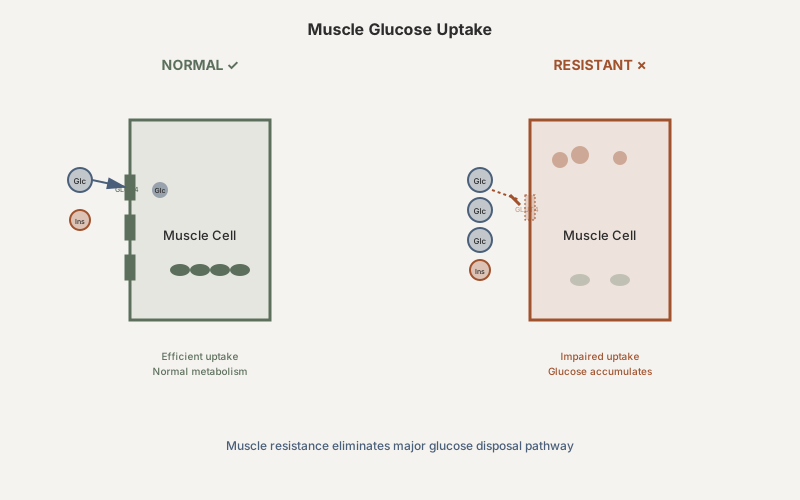
Skeletal muscle accounts for approximately 40% of total body weight in healthy adults and represents the single largest site of glucose disposal in the body. After a meal, when blood glucose rises and insulin secretion increases, muscle tissue normally takes up 70-80% of that glucose for immediate energy use or storage as glycogen. This massive glucose uptake capacity makes muscle the primary buffer against post-meal hyperglycemia.
Insulin-stimulated glucose uptake in muscle depends on complex coordinated processes: insulin binds to receptors on muscle cell membranes, triggering signaling cascades that cause glucose transporter proteins—particularly GLUT4—to move from internal storage to the cell surface. These transporters allow glucose to enter the cell, where it undergoes glycolysis for energy or gets stored as glycogen. The efficiency of this system determines how effectively muscle buffers blood glucose.
In Type 2 diabetes, muscle insulin resistance profoundly impairs this disposal capacity. Muscle takes up dramatically less glucose in response to insulin. Post-meal glucose remains elevated for extended periods because the normal sink for that glucose—skeletal muscle—has lost responsiveness. This single deficit—impaired muscle glucose uptake—substantially accounts for post-meal hyperglycemia characteristic of diabetes.
"Ayurveda maps this to Mamsa Dhatu depletion — the progressive loss of healthy muscle tissue function as metabolic imbalance penetrates this tissue layer. When Mamsa Agni (the tissue-level metabolic fire within muscle) weakens, glucose uptake and utilisation both decline."
Ayurvedic Clinical Lens · Diabetes Reversal Clinic
Mechanisms of Muscular Insulin Resistance
Muscle insulin resistance develops through mechanisms parallel to those in other tissues but with features specific to muscle cell biology. Lipid accumulation in muscle cells—intramyocellular lipid—triggers inflammatory signaling that interferes with insulin action. Unlike adipocytes designed for fat storage, muscle cells storing excessive lipid experience it as toxic stress.
These intramyocellular lipids generate metabolites—particularly diacylglycerols and ceramides—that directly block insulin signaling. They activate protein kinases that phosphorylate insulin receptor substrate proteins at inhibitory sites, preventing signal propagation. The more lipid accumulates in muscle, the less insulin can stimulate glucose uptake, creating a self-reinforcing cycle where reduced glucose oxidation leads to more lipid storage which further worsens insulin resistance.
Mitochondrial dysfunction plays a critical role specific to muscle tissue. Muscle requires enormous mitochondrial capacity for energy production—particularly oxidative muscle fibers that rely on aerobic metabolism. In diabetes, muscle mitochondrial content decreases and remaining mitochondria function inefficiently. This mitochondrial deficit means muscle cannot adequately oxidize glucose even when it successfully enters the cell.
Research demonstrates that diabetic muscle has 30-40% fewer mitochondria than healthy muscle, and those present show reduced oxidative capacity. This double deficit—fewer mitochondria operating less efficiently—creates severe energy production impairment. Glucose entering muscle cells cannot be properly metabolized, so it accumulates as partially metabolized intermediates that generate oxidative stress and further damage cellular function.
Loss of Oxidative Capacity and Fiber Type Shift
Skeletal muscle contains different fiber types with distinct metabolic characteristics. Type I fibers—slow-twitch oxidative fibers—rely primarily on aerobic metabolism and are highly insulin-sensitive. Type II fibers—fast-twitch glycolytic fibers—depend more on anaerobic glycolysis and are less insulin-sensitive. Healthy muscle contains balanced proportions of both fiber types.
In long-term diabetes, muscle undergoes fiber type transformation. The proportion of insulin-sensitive Type I fibers decreases while Type II fibers increase. This shift occurs through multiple mechanisms: reduced physical activity decreases demand for oxidative fibers, chronic metabolic stress impairs Type I fiber maintenance, and inflammatory signals promote conversion toward glycolytic metabolism.
This fiber type shift worsens insulin resistance independently of other factors. Even if insulin signaling pathways remained intact, a muscle composed predominantly of Type II fibers would show reduced glucose uptake capacity compared to balanced muscle. The shift represents structural adaptation that persists even after metabolic conditions improve.
Sarcopenia—loss of muscle mass that accelerates with age and is worsened by diabetes—further reduces glucose disposal capacity. Less total muscle mass means less total glucose uptake capacity regardless of per-cell insulin sensitivity. Patients lose both the quality of insulin response in remaining muscle and the quantity of muscle available for glucose disposal.
The Exercise Paradox in Advanced Diabetes
Physical exercise normally enhances muscle insulin sensitivity through multiple mechanisms: it stimulates glucose uptake independent of insulin via contraction-mediated pathways, increases mitochondrial biogenesis, improves oxidative capacity, and enhances insulin signaling. Exercise represents the single most potent physiological intervention for improving muscle glucose metabolism.
But in advanced diabetes with severe muscle dysfunction, exercise response becomes blunted. The acute glucose-lowering effects of contraction persist—muscle still takes up glucose during activity. But the adaptive training responses that should improve baseline function fail to materialize adequately. Mitochondrial biogenesis remains impaired. Insulin sensitivity improves minimally despite regular training.
This blunted response reflects the same cellular dysfunction limiting other interventions. Muscle cells with damaged mitochondria, impaired protein synthesis machinery, and chronic inflammatory stress cannot execute the adaptations that exercise should trigger. The training stimulus arrives but the cellular machinery to respond to it has degraded.
Additionally, severe insulin resistance reduces exercise capacity itself. Muscle cannot efficiently utilize glucose or fatty acids for energy during activity. Fatigue develops prematurely. Exercise intensity that healthy individuals sustain comfortably becomes exhausting for diabetics. This reduced capacity limits training volume and intensity, further limiting adaptive response.
Interconnection With Hepatic and Adipose Dysfunction
Muscle insulin resistance does not occur independently. It exists within the metabolic network involving liver and adipose tissue. Hepatic glucose overproduction floods circulation with glucose that resistant muscle cannot adequately clear. Muscle experiences persistent glucose excess not just from dietary intake but from endogenous hepatic production.
Adipose tissue contributes through excessive fatty acid release. These fatty acids compete with glucose for oxidation in muscle—when fatty acid availability is high, muscle preferentially burns fat and reduces glucose uptake further. This phenomenon, called the Randle cycle, means that dysfunctional adipose tissue directly worsens muscle glucose metabolism independent of muscle's own insulin resistance.
The fatty acids also infiltrate muscle, creating the intramyocellular lipid that drives muscular insulin resistance. Muscle becomes a repository for fat that adipose tissue releases excessively. This fat storage in non-adipose tissue—ectopic fat deposition—represents profound metabolic dysregulation where normal compartmentalization of fat and carbohydrate metabolism has collapsed.
Correcting muscle insulin resistance therefore requires addressing these interconnected dysfunctions. Improving muscle while liver continues overproducing glucose and adipose tissue continues releasing excess fatty acids provides limited benefit. The muscle remains under metabolic assault from dysregulation in other tissues. Systematic correction must address the network coordinately rather than targeting muscle in isolation.
Implications for Treatment Strategy
Recognition of severe muscle insulin resistance suggests that interventions targeting muscle specifically should be prioritized alongside hepatic and adipose interventions. Resistance training—which builds muscle mass and can shift fiber type composition toward more oxidative fibers—becomes particularly valuable. Increased muscle mass provides greater total glucose disposal capacity even if per-cell insulin sensitivity remains impaired.
Approaches that enhance mitochondrial function specifically may benefit muscle more than general metabolic interventions. Supporting mitochondrial biogenesis, reducing mitochondrial oxidative stress, and improving mitochondrial efficiency can restore some of muscle's lost oxidative capacity. This mitochondrial restoration allows better glucose metabolism even before insulin signaling fully normalizes.
Reducing intramyocellular lipid becomes a specific target. This requires not just reducing fatty acid delivery from adipose tissue but enhancing muscle's ability to oxidize fatty acids rather than storing them. Interventions that improve fat oxidation in muscle reduce lipid accumulation and its toxic effects on insulin signaling.
Timing of intervention matters significantly. Early in disease, when muscle dysfunction is primarily functional rather than structural, exercise and metabolic improvement produce robust responses. Later, after substantial mitochondrial loss, fiber type shift, and sarcopenia, the same interventions generate much smaller benefits. Preserving muscle metabolic function before irreversible changes occur offers far better outcomes than attempting restoration after advanced structural damage.
Recovery Potential and Realistic Expectations
Muscle insulin sensitivity can improve substantially even in advanced disease, but full restoration to normal function rarely occurs after decades of dysfunction. Mitochondrial regeneration takes months of sustained metabolic improvement. Fiber type shifts reverse slowly. Lost muscle mass rebuilds gradually through resistance training, but age-related limits exist.
Realistic goals involve achieving sufficient muscle glucose disposal to substantially reduce post-meal hyperglycemia and decrease reliance on medication. This may occur even when muscle has not returned to completely normal insulin sensitivity. A 30-40% improvement in muscle glucose uptake can produce clinically meaningful glucose control improvement while still leaving muscle function below optimal.
The timeline for muscle improvement typically extends longer than for other tissues. Hepatic insulin sensitivity can improve within months. Adipose tissue function can normalize relatively quickly with weight loss. But muscle—with its unique dependence on mitochondrial regeneration, fiber type adaptation, and structural remodeling—requires sustained intervention over six months to a year or more before substantial improvement manifests.
This extended timeline demands patience and persistence. Patients may see minimal muscle-related improvement in early correction phases while hepatic and other improvements occur. Understanding that muscle restoration operates on longer biological timelines prevents premature abandonment of interventions that require extended time to generate measurable benefit. Ayurvedic perspective: Restoration of Mamsa Dhatu function is a specific phase of Ayurvedic correction — one that cannot be rushed, because muscle tissue metabolic capacity rebuilds slowly and requires the hepatic and inflammatory foundations to be stable first.