
Two Fundamentally Different Approaches
Conventional diabetes management operates primarily through suppression: medications suppress glucose levels, blood pressure, and lipid abnormalities. Insulin forces glucose into resistant cells. Metformin suppresses hepatic glucose production. Statins suppress cholesterol synthesis. Each intervention targets a symptom or parameter, forcing it toward normal through pharmaceutical override of underlying dysfunction.
This suppression strategy succeeds at controlling measurable parameters—the visible endpoints that appear on laboratory reports and drive treatment decisions. Glucose readings improve. Lipid panels normalize. Blood pressure reaches target. By conventional metrics, the patient appears controlled. But suppression does not repair the metabolic dysfunction generating those abnormal parameters. It masks expression while underlying pathology continues evolving.
Ayurvedic approach operates through sequencing: identifying the order in which internal systems failed and addressing dysfunction in specific sequence that allows genuine repair. Rather than forcing parameters into normal ranges, sequenced correction rebuilds the functional capacity that should naturally maintain those parameters. The goal is restoration of self-regulating metabolism, not pharmaceutical life support.
The distinction matters profoundly for long-term outcomes. Suppression creates pharmaceutical dependence—parameters remain normal only as long as suppressive medications continue. Stopping treatment produces rapid deterioration because underlying dysfunction persists unchanged. Sequenced correction progressively reduces medication requirements as internal function restores, ultimately enabling sustainable metabolic health with minimal or no pharmaceutical support.
"This is Ayurveda's core clinical contribution: Nidana-Panchaka — understanding the disease not just by its expression but by the sequence of its causation. Correction that follows the failure sequence in reverse is the only approach that addresses the disease at the depth where it actually resides."
Ayurvedic Clinical Lens · Diabetes Reversal Clinic
Why Sequence Matters: The Principle of Root Cause
Diabetes progression follows causal chains where one system's failure triggers downstream dysfunction in others. Perhaps adipose tissue inflammation begins the cascade, releasing fatty acids that infiltrate and damage liver, leading to hepatic insulin resistance that stresses the pancreas, eventually causing beta-cell exhaustion. Or the sequence might begin with hepatic dysfunction, or pancreatic vulnerability, or another primary failure point—patterns vary individually.
Regardless of the specific sequence, addressing downstream effects while ignoring upstream causes provides minimal lasting benefit. If adipose inflammation drives the cascade, treating pancreatic exhaustion or hepatic resistance without addressing adipose dysfunction means the root cause continues generating the downstream problems being treated. The intervention battles consequences while causes remain active.
Conversely, correcting systems in proper sequence—addressing root causes before downstream effects—allows cascade reversal. When the adipose tissue normalizes, fatty acid overflow to liver ceases. Hepatic function can recover without continuous toxic insult. As liver normalizes, pancreatic stress reduces. Beta cells can regenerate capacity in the absence of overwhelming demand. Correction flows downstream naturally once upstream sources of dysfunction are addressed.
Standard protocols apply identical interventions regardless of individual failure sequence. Two patients with the same glucose readings receive the same medications despite having entirely different causative chains. One needs primary focus on adipose tissue, the other on hepatic function, yet both get identical treatment. This sequence-blind approach explains why outcomes vary so dramatically among patients with similar laboratory values.
Identifying Individual Failure Sequence
Determining each patient's specific failure sequence requires assessment beyond standard laboratory tests. Glucose, HbA1c, and lipids reveal that dysfunction exists but not the order in which systems failed. Detailed clinical evaluation examines multiple parameters: fasting versus post-meal glucose patterns, insulin and C-peptide levels, inflammatory markers, liver function indicators, body composition measurements, medication response patterns.
Patients with predominant hepatic dysfunction show disproportionately elevated fasting glucose while post-meal spikes remain moderate. Their triglycerides are high while HDL is low. Metformin produces dramatic improvement. This pattern indicates liver as primary driver—correction should prioritize hepatic insulin sensitivity restoration, fatty liver reversal, and reduction of factors promoting hepatic glucose production.
Those with primary pancreatic insufficiency demonstrate low C-peptide despite elevated glucose, minimal response to insulin secretagogues, and deteriorating control despite reasonable insulin sensitivity. Their sequence demands beta-cell protection as first priority—reducing secretory burden, addressing inflammatory stress on islets, supporting pancreatic reserve capacity before addressing peripheral insulin resistance.
Patients showing adipose-driven dysfunction present with high BMI, visceral obesity, severe insulin resistance across multiple tissues, elevated inflammatory markers, and fatty infiltration of liver and muscle. Their cascade began with adipose tissue malfunction—correction must start with reducing adipose inflammation, normalizing adipokine secretion, and preventing ectopic fat deposition before peripheral tissues can recover.
Temporal Sequencing: Which Systems First
Even after identifying the causative sequence, effective intervention requires temporal sequencing—determining the order in which to address identified dysfunctions. Some systems must stabilize before others can be effectively corrected. Attempting to restore pancreatic function while severe insulin resistance persists subjects recovering beta cells to continued overwhelming demand. Addressing muscle insulin resistance while hepatic glucose production remains excessive floods muscle with glucose it cannot handle.
General sequencing principles guide intervention order. First, reduce acute metabolic stress and inflammation—these factors damage all tissues and prevent any system from recovering. Second, address the primary driver identified in causative assessment—whether hepatic, adipose, pancreatic, or other. Third, support downstream affected systems as primary driver normalizes—allowing natural recovery cascade. Fourth, address residual dysfunction in systems that did not fully self-correct.
This phased approach prevents overwhelming biological systems with simultaneous multiple demands. Early phases focus narrowly on critical priorities. As those stabilize and capacity increases, intervention scope gradually expands. The sequence respects biological capacity at each stage, never demanding more adaptation than compromised systems can provide. Progress appears slower but ultimately achieves more through sustainable staged improvement.
The Limitation of Simultaneous Multi-Target Protocols
Standard diabetes protocols typically initiate multiple interventions simultaneously: glucose-lowering medication, lipid control, blood pressure management, dietary changes, exercise recommendations. This shotgun approach addresses multiple parameters at once, hoping comprehensive intervention produces comprehensive benefit.
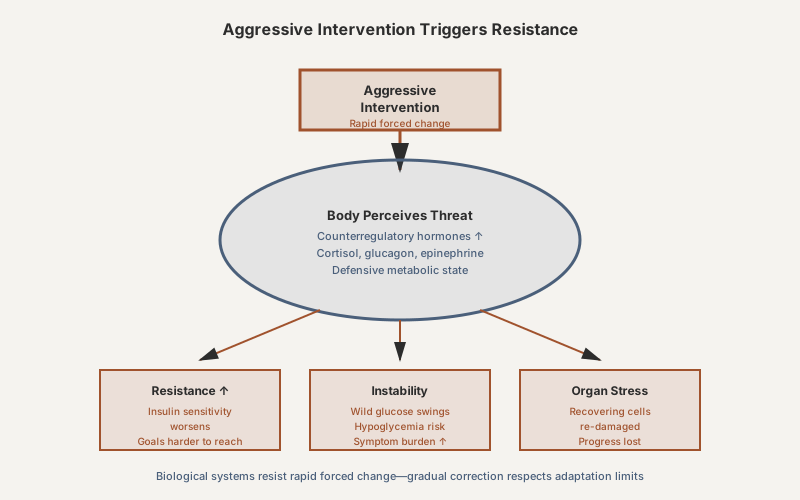
But simultaneous multi-system intervention in advanced diabetes often overwhelms adaptive capacity. Each medication imposes metabolic burden. Each behavioral change demands adaptation. The cumulative stress exceeds what compromised systems can manage. Patients experience treatment intolerance, side effects accumulate, adherence collapses. What appears as patient failure actually reflects biological reality—the intervention demands more simultaneous adaptation than the body can provide.
Additionally, simultaneous intervention obscures cause-effect relationships. When five medications start together and glucose improves, which intervention was effective? Which was unnecessary? Which generated side effects that other medications must counteract? The lack of clear attribution prevents optimization. Treatment becomes a complex pharmaceutical cocktail that cannot be rationally adjusted.
Sequential intervention allows clear attribution. One intervention initiates, response is assessed, dose is optimized, and only after achieving stable benefit does the next intervention layer on. Each addition has clear purpose based on what previous interventions achieved and what gaps remain. The building approach creates rational, optimizable treatment rather than shotgun polypharmacy.
How Suppression Creates Dependency Cycles
Suppressive interventions often worsen the underlying dysfunction they mask. Insulin therapy, while necessary for many patients, can deepen insulin resistance through chronic hyperinsulinemia. The medication becomes increasingly necessary as it worsens the pathology requiring medication. Sulfonylureas force insulin secretion, accelerating beta-cell exhaustion and hastening progression to insulin dependence.
These dependency cycles explain the common pattern of progressive medication escalation despite apparent control. Glucose readings remain acceptable through increasing pharmaceutical force, but internal dysfunction deepens. Eventually, even maximum medication cannot maintain control—the suppression approach has exhausted its capacity while underlying pathology has progressed unabated.
Sequenced correction avoids dependency cycles by progressively restoring function rather than overriding it. As internal capacity rebuilds, medication requirements decrease rather than escalate. The trajectory moves toward metabolic independence rather than increasing pharmaceutical dependence. This progressive liberation from medication provides objective evidence of genuine improvement rather than forced suppression.
Timing Windows and Optimal Intervention Points
Different metabolic systems respond optimally to intervention at different times. Inflammatory reduction shows rapid benefit when initiated first—inflammation impairs all other correction attempts. Addressing inflammation early enables subsequent interventions to work more effectively. Conversely, attempting complex metabolic restoration while inflammation remains high wastes effort fighting constant inflammatory interference.
Hepatic correction often follows inflammatory control. The liver recovers function relatively quickly once stressors are removed, and improved hepatic function benefits all other systems. Pancreatic restoration typically comes later—beta cells require stable metabolic environment before they can safely regenerate capacity. Attempting pancreatic restoration while metabolic chaos persists subjects recovering beta cells to ongoing damage.
These timing considerations reflect biological repair sequences. Certain systems must stabilize before others can effectively recover. Intervention timing that respects these natural sequences achieves more with less effort than attempting simultaneous everything. The phased approach aligns intervention with biological readiness, maximizing efficiency of corrective work.
Integration of Modern and Traditional Understanding
The sequencing principle is Ayurveda's critical contribution to diabetes management. Modern medicine excels at measuring individual parameters and developing targeted interventions but struggles with determining intervention order for individual patients. Ayurvedic framework provides that missing dimension—the diagnostic logic identifying failure sequences and the therapeutic wisdom knowing which systems to address first.
Integration uses modern diagnostics to quantify dysfunction and Ayurvedic assessment to sequence correction. Laboratory tests measure glucose, insulin, inflammation, organ function. Ayurvedic evaluation interprets those measurements within causal frameworks, identifying primary drivers versus downstream effects. Modern medications, dietary strategies, and lifestyle interventions then apply in sequence determined by Ayurvedic assessment rather than standardized protocols.
This integrated approach combines the precision of contemporary biomedicine with the systems intelligence of traditional medicine. Neither alone provides complete answer—modern medicine without sequencing wisdom applies powerful tools in suboptimal order; traditional medicine without modern measurement cannot precisely track progress or adjust intervention. Together, they enable genuinely individualized sequential correction that suppression-based standardized protocols cannot achieve.
Measuring Success in Sequenced Correction
Success metrics differ between suppression and sequencing approaches. Suppression measures glucose, lipids, blood pressure—parameters kept in range through pharmaceutical force. These numbers may improve while underlying dysfunction worsens, creating false security.
Sequenced correction measures functional restoration: reduced medication requirements, improved metabolic stability, decreased glucose variability, enhanced stress tolerance, better energy levels. These indicators reflect genuine biological improvement rather than forced suppression. A patient reducing from four medications to one while maintaining glucose control has achieved more than one maintaining the same glucose on escalating medication.
Additionally, sequencing success appears in improved parameter stability with less intervention. Glucose that required strict dietary control and maximum medication now remains stable with moderate diet and minimal medication. This stability under reduced control effort demonstrates restored self-regulation—the ultimate goal. The body regains capacity to maintain itself rather than requiring constant external management. Ayurvedic perspective: The Ayurvedic advantage in sequencing is not philosophical — it is diagnostic. By mapping the specific order in which each patient's internal systems failed, the treatment sequence can be individualised in a way that no standardised protocol can replicate.