
Clarifying Terminology and Expectations
The term "reversal" in diabetes context generates confusion and unrealistic expectations. Popular usage often implies complete restoration to pre-diabetic state—elimination of all metabolic dysfunction, cessation of all medication, normal glucose metabolism indistinguishable from someone who never had diabetes. This interpretation sets up inevitable disappointment because it describes biology that rarely occurs in long-standing diabetes.
In clinical reality, reversal in advanced diabetes means something more nuanced and achievable: progressive restoration of metabolic function to the maximum degree possible given accumulated structural damage, slowing or halting disease progression, reduction in medication requirements as internal capacity rebuilds, and transition from worsening trajectory to stabilization or improvement trajectory.
This clinical definition acknowledges biological constraints. Years of diabetes create permanent changes—lost capillaries do not regenerate, destroyed beta cells do not return, advanced glycation products persist, structural organ changes remain. Reversal works within these constraints, maximizing recovery of what can recover while accepting limitations of what cannot.
The distinction matters profoundly for treatment approach and patient psychology. Pursuing impossible complete restoration leads to aggressive interventions that may harm more than help. Accepting realistic partial reversal allows appropriate intervention intensity targeting achievable improvements. The goal shifts from erasing diabetic history to achieving best possible metabolic health despite that history.
"Ayurveda defines reversal not as the erasure of disease history, but as the restoration of Svasthya — the return of each system to its own stable, self-regulating function. This is a functional definition, not a laboratory one, and it acknowledges what biology actually permits."
Ayurvedic Clinical Lens · Diabetes Reversal Clinic
What Can Actually Reverse
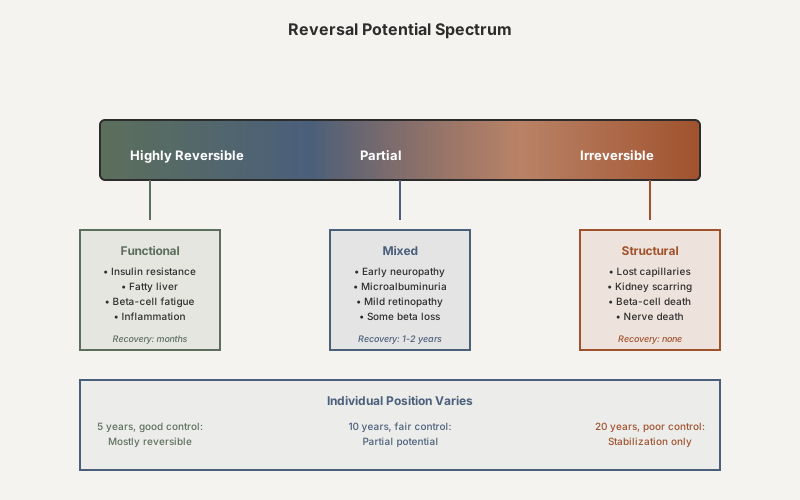
Certain aspects of diabetes dysfunction show genuine reversibility even in advanced disease. Insulin resistance can improve substantially—hepatic, muscle, and adipose tissue insulin sensitivity may recover to near-normal levels with appropriate intervention. This functional improvement occurs as cells clear ectopic lipid, reduce inflammatory burden, restore mitochondrial function, and rebuild insulin signaling pathways.
Metabolic inflammation can resolve significantly. Adipose tissue inflammation decreases with weight loss and improved metabolic health. Systemic inflammatory markers decline. This inflammatory reduction benefits all organs and removes a major driver of ongoing dysfunction. While complete elimination of inflammatory processes may not occur, substantial reduction is achievable and provides meaningful benefit.
Hepatic steatosis shows good reversibility potential. Fatty liver can resolve substantially or completely with weight loss, improved insulin sensitivity, and reduced hepatic metabolic stress. As liver fat clears, hepatic function improves—glucose production normalizes, lipid metabolism corrects, inflammatory hepatokines decrease. Hepatic recovery often proceeds faster than other organ systems.
Pancreatic beta-cell function may partially recover in patients who have not progressed to complete beta-cell destruction. Fatigued but living beta cells can regenerate secretory capacity when metabolic burden reduces and inflammatory stress resolves. C-peptide levels may increase. Insulin requirements may decrease. Complete restoration of normal beta-cell mass rarely occurs, but meaningful functional recovery is possible.
What Cannot Reverse
Structural organ damage accumulated over years shows minimal reversibility. Advanced retinopathy with extensive capillary loss and retinal scarring cannot reverse—lost capillaries are gone permanently. Vision preservation becomes the realistic goal rather than vision restoration. Similarly, advanced nephropathy with glomerular scarring and reduced kidney mass cannot reverse to normal function.
Established neuropathy shows limited recovery potential. Nerve fibers that have degenerated do not readily regenerate. Sensation lost to advanced neuropathy typically remains absent. Prevention of further nerve damage and stabilization of existing function represent realistic goals rather than restoration of normal sensation.
Cardiovascular disease established during years of diabetes—atherosclerotic plaques, arterial stiffening, structural heart changes—persists even after metabolic improvement. While progression can slow or halt, existing structural vascular damage remains. Risk reduction rather than risk elimination becomes the appropriate expectation.
Epigenetic modifications may persist despite metabolic normalization. Years of hyperglycemia create gene expression changes that do not immediately reverse when glucose normalizes. These persistent alterations may continue driving pathological processes even after surface metabolic parameters improve. Complete epigenetic reset to pre-diabetic state likely never occurs.
Progression Trajectory as Success Metric
Perhaps the most important reversal concept involves changing disease trajectory rather than achieving specific endpoint. A patient whose diabetes was progressively worsening—rising HbA1c, escalating medication, emerging complications—who stabilizes or begins improving has achieved reversal even if they have not reached normal metabolism.
This trajectory change represents fundamental alteration in disease biology. Instead of exhausting compensatory capacity and accelerating toward multi-organ failure, the patient has halted decline and initiated recovery processes. They may still require medication. Their glucose may not be perfectly normal. But the trajectory has shifted from deterioration to stabilization or improvement.
Clinically, trajectory change manifests in multiple ways: medication requirements that were escalating now stabilize or decrease; complications that were progressing now halt or slow; symptoms that were worsening now improve; metabolic parameters that were deteriorating now hold steady or recover. These changes indicate that underlying biology has fundamentally shifted direction.
Increased metabolic stability provides additional evidence of trajectory change. Glucose that previously showed wild swings becomes more consistent. Energy levels that fluctuated dramatically become steadier. The body demonstrates improved self-regulation rather than chaotic dysregulation requiring constant external management.
Medication Reduction as Reversal Indicator
One of the most objective measures of genuine reversal is progressive medication reduction while maintaining or improving glycemic control. A patient who reduces from four diabetes medications to two, or from high-dose insulin to minimal doses, while HbA1c remains stable or improves has demonstrated real internal capacity restoration.
This medication reduction proves that intervention has rebuilt metabolic function rather than merely suppressing symptoms. The body now self-regulates to a greater degree. Less pharmaceutical force is required to maintain control. This represents the opposite of typical diabetes progression where medication requirements continually escalate.
However, medication reduction must follow internal restoration—not precede it. Prematurely reducing medication before internal capacity has adequately recovered risks dangerous destabilization. The sequence matters: first rebuild internal function through appropriate intervention, then gradually reduce medication as improving function makes it less necessary. Forcing medication reduction without internal change is not reversal but rather inadequate treatment.
Individual Variation in Reversal Potential
Reversal potential varies dramatically between individuals based on disease duration, severity of accumulated damage, genetic factors, age, overall health status, and adherence capacity. Someone with five years of reasonably controlled diabetes may achieve near-complete functional restoration. Someone with twenty-five years of poorly controlled disease with established complications may achieve meaningful stabilization but limited functional recovery.
This variation means reversal goals must be individualized. Applying identical targets to all patients ignores biological reality. The patient with minimal accumulated damage may appropriately pursue aggressive goals. The patient with extensive structural damage should focus on stabilization and preventing further decline. Both represent successful outcomes appropriate to their individual biology.
Age influences reversal potential through effects on cellular repair capacity, mitochondrial function, immune system competence, and overall regenerative ability. Younger patients generally show greater recovery capacity than elderly patients. This does not mean older patients cannot improve—meaningful gains are possible at any age—but expectations should account for age-related constraints on repair mechanisms.
Reversal as Ongoing Process Rather Than Event
Reversal in long-standing diabetes is not an event that occurs and completes but rather an ongoing process requiring sustained engagement. Initial improvements may appear within months, but deep metabolic restoration continues over years. The process does not have a clear endpoint where reversal is "done"—it represents sustained commitment to maintaining and progressively improving metabolic health.
This means lifestyle changes and corrective interventions cannot be temporary. They become permanent elements of maintaining achieved improvements. A patient who reverses substantial dysfunction through intensive intervention but then returns to previous lifestyle will likely lose those gains. The reversal maintenance requires ongoing adherence to the behaviors and interventions that created improvement.
However, maintenance burden typically decreases as internal capacity restores. Early in reversal process, strict management may be necessary. As function improves, the required intervention intensity often moderates—the body can maintain itself with less external support. But complete abandonment of corrective practices risks reversion to progressive dysfunction.
Quality of Life as Ultimate Reversal Measure
Beyond laboratory values and medication counts, reversal success should be measured by quality of life improvement. Do patients have better energy? Can they participate in activities previously limited by diabetes? Do they feel subjectively healthier? These experiential measures often prove more meaningful than any specific numerical target.
Some patients achieve dramatic HbA1c improvement yet feel worse due to hypoglycemia, medication side effects, or overwhelming treatment burden. Others achieve modest numerical improvement but report dramatic quality of life enhancement through increased energy, reduced symptoms, and decreased anxiety about health. The latter has achieved more meaningful reversal despite less impressive numbers.
This quality-of-life focus prevents sacrificing wellness at the altar of numerical targets. If achieving HbA1c below 6.5% requires such extreme measures that life becomes dominated by diabetes management and fear of hypoglycemia, accepting HbA1c of 7% with good quality of life may represent superior outcome. Reversal should enhance life, not consume it.
Setting Realistic Patient Expectations
Honest communication about reversal possibilities prevents disappointment and maintains engagement. Patients beginning intensive correction should understand that complete restoration to non-diabetic state is unlikely after years of disease. But meaningful improvement, slowed progression, reduced medication burden, and enhanced quality of life are realistic and achievable goals worth pursuing.
The message should emphasize possibility within constraints: "We cannot erase diabetic history, but we can maximize current and future metabolic health. Medication may always be necessary, but less than you currently require. Glucose may not be perfectly normal, but more stable and better controlled. Complications cannot reverse, but progression can slow or halt. Your body can function better than it does now, though perhaps not as it did before diabetes."
This realistic framing maintains hope while preventing unrealistic expectations. It allows patients to celebrate meaningful gains—medication reduction, improved energy, slowed progression—as genuine successes rather than dismissing them as inadequate because complete cure was not achieved. Reversal, properly understood, represents substantial victory even when imperfect. Ayurvedic perspective: From an Ayurvedic standpoint, meaningful reversal means the disease is no longer actively progressing, the body has regained sufficient Agni to self-regulate, and the Dosha imbalance that sustained the disease has been sufficiently corrected to prevent continued deterioration.